


When we hear the word pudding today, we tend to think of something sweet and comforting—especially if you live in the United States. But for most of its history, pudding meant something very different. This article traces pudding’s surprising journey from Roman sausage-making and meat-filled casings to Victorian Christmas tables, and finally to the smooth, custardy instant desserts that came to define pudding in the U.S.—along the way uncovering the origins of botulism, Botox, and the much-misquoted expression “the proof is in the pudding.”
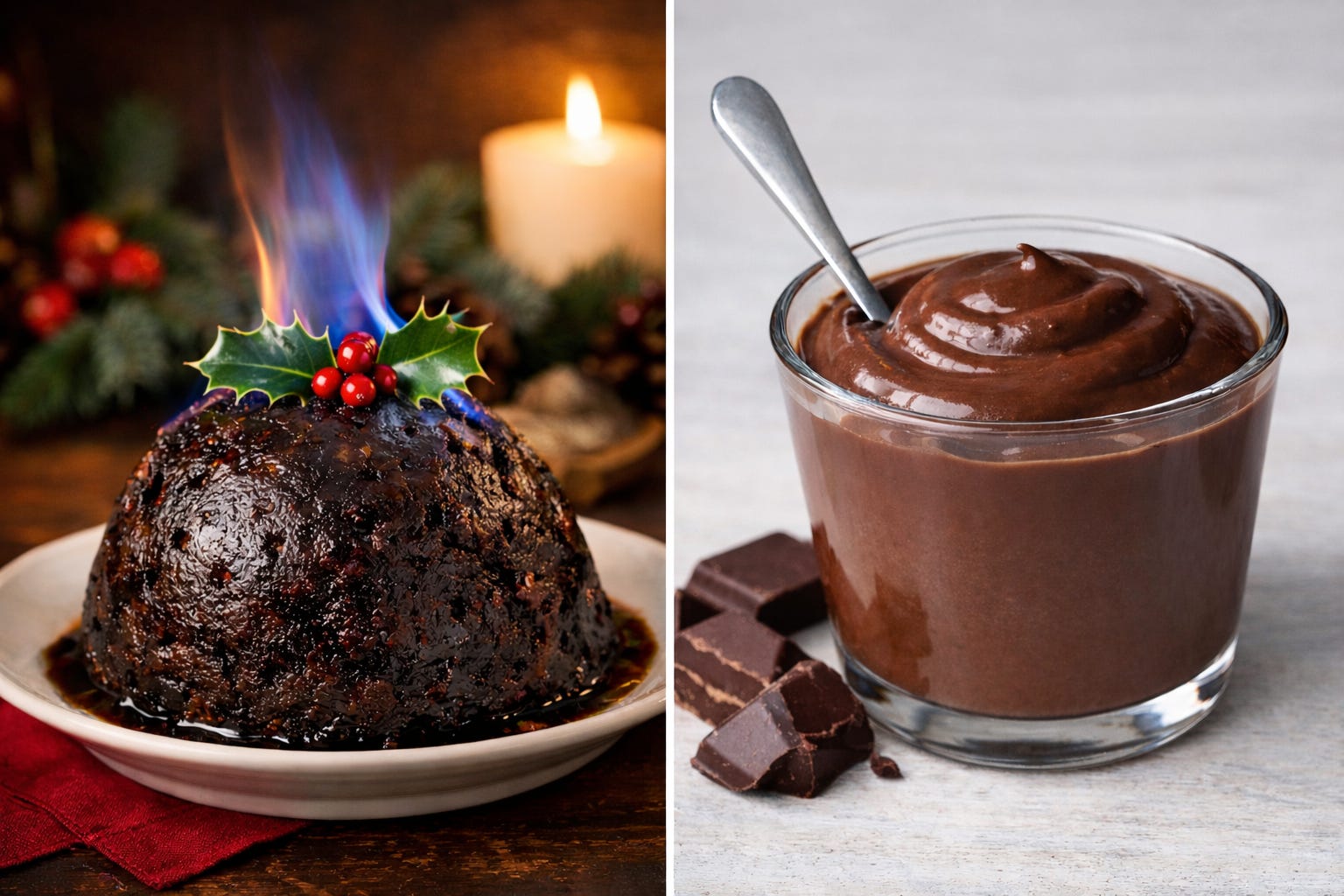
In the United States, when we hear the word pudding, we tend to think of something sweet and familiar: a creamy, custard-like dessert made with milk, sugar, and cornstarch. It’s nostalgic and comforting.
In the United Kingdom—and in places shaped by British food culture like Ireland, Australia, and parts of Canada—the word pudding means something broader. It can refer to dessert, yes, but also to a category of foods that includes steamed dishes, boiled dishes, and historically, savory ones. In those contexts, pudding doesn’t automatically signal sweetness.
For most of its long history, pudding had nothing to do with dessert at all. The word referred to a method of cooking rather than a sweet dish—and that method looked very different from what we associate with pudding today.
Very different and very bloody.
To understand what that method was—and where it came from—we have to go back much further. When the Romans occupied Britain beginning in the first century CE, they brought with them sausage-making methods—ways of mixing, casing, boiling, and preserving foods—that would go on to shape British cooking for centuries.
Originally, these puddings were made using the same basic process as sausages. Early puddings were mixtures of animal meat, fat, blood, grains, and seasonings—often fairly liquid—stuffed into a casing (usually animal intestines) and then boiled or steamed until they set. (Steaming and boiling were primary cooking methods for centuries, largely because most households did not have ovens but did have large pots or wash basins that could be used over a fire.)

This is why dishes like the following all come from the same culinary tradition—foods defined less by sweetness than by cooking technique and animal flesh:
Black pudding is a type of blood sausage, traditionally made with animal blood mixed with grains and fat, then cooked in a casing. It is one of the clearest surviving examples of what pudding originally meant.
Suet pudding refers to a family of steamed puddings made with suet, the hard fat found around certain organs such as the kidneys. Suet was used for its ability to hold structure when steamed, giving these puddings their dense, cohesive texture.
Steak and kidney pudding combines chopped animal meat and kidneys encased in a suet-based dough and steamed for hours.
Yorkshire pudding originated as a savory batter cooked beneath roasting animal meat to catch dripping fat. Early versions were not the light, crisp side dish we know now, but part of the same tradition of using heat, fat, and structure efficiently. Over time, it evolved into the distinct dish familiar today.
Haggis, made from sheep organs mixed with oats and seasonings and traditionally cooked in a stomach casing, represents a closely related practice from Scotland. While not always labeled a pudding, it shares the same foundational technique and history.
In short, the earliest puddings were essentially sausages—a history that’s reflected in the word itself.
What the Word Pudding Really Means
Pudding comes from the Latin word botellus, which literally means “sausage.” The French word boudin, also meaning “sausage,” comes from the same root.
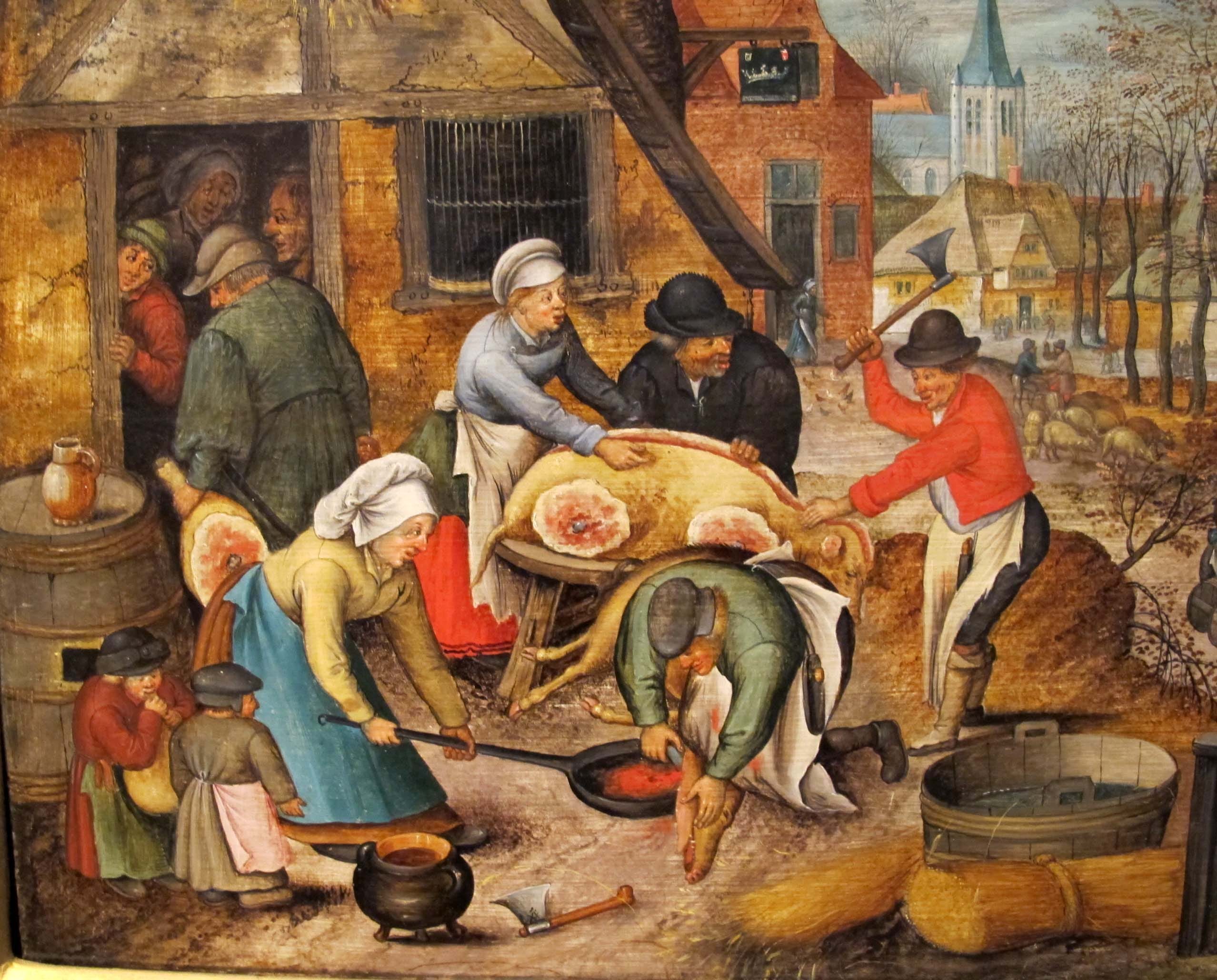
From botellus we also get botulism, a term coined after the botulinum toxin was identified as the cause of paralysis in cases of sausage poisoning—from spoiled sausages.
The word Botox comes from that same root. Botox is a portmanteau of botulinum toxin. Yes, Botox has its roots in spoiled sausage.
In the early nineteenth century, German physician Justinus Kerner studied a mysterious and often fatal illness linked to contaminated sausages and correctly described its hallmark effect: progressive muscle paralysis. Decades later, in 1895, Belgian scientist Émile van Ermengem identified the bacterium responsible—Clostridium botulinum—and isolated the toxin that caused the paralysis.
In the twentieth century, researchers began to understand that the toxin works by blocking nerve signals to muscles, preventing them from contracting. In the 1970s, ophthalmologist Alan Scott began experimenting with extremely small, controlled doses of the toxin to treat eye muscle disorders. That work eventually led to wider medical uses—and, later, cosmetic ones.
By the early 2000s, botulinum toxin had been approved for cosmetic use under the name Botox, transforming a substance once feared for its lethality into an aesthetic tool. The sausage connection, however, remains embedded in the language.
When Did Puddings Stop Containing Meat?
The word pudding entered English in the 13th century from Anglo-Norman French, where it referred quite plainly to stuffed animal entrails. Early written records from 1287 spell it pudinges and pundinges. And for centuries, pudding continued to mean “sausage”—well into the 19th century.
But over time, the ingredients changed.
As trade expanded—and as systems of colonial exploitation and the transatlantic slave trade made ingredients like dried fruit, sugar, and spices cheaper and more widely available—puddings began to shift away from animal meat. By the early modern period—and especially by the Victorian era—many puddings shifted toward dried fruit, nuts, and flour instead of flesh, even as suet continued to be the primary fat.
This is when we begin to see plum pudding, figgy pudding, and Christmas pudding—none of which contain animal flesh (though plum pudding also doesn’t contain plums)!
Plum pudding is a dense, steamed pudding made from dried fruit, flour, sugar, spices, and fat. Despite the name, it typically contains no fresh plums; in earlier English usage, plum was a general term for “dried fruit,” such as raisins or currants.
Figgy pudding is as a variation or alternative name for plum or Christmas pudding—one that traditionally included figs among the dried fruits. The name survives most famously in “We Wish You a Merry Christmas,” preserving an older way of describing the same basic pudding.
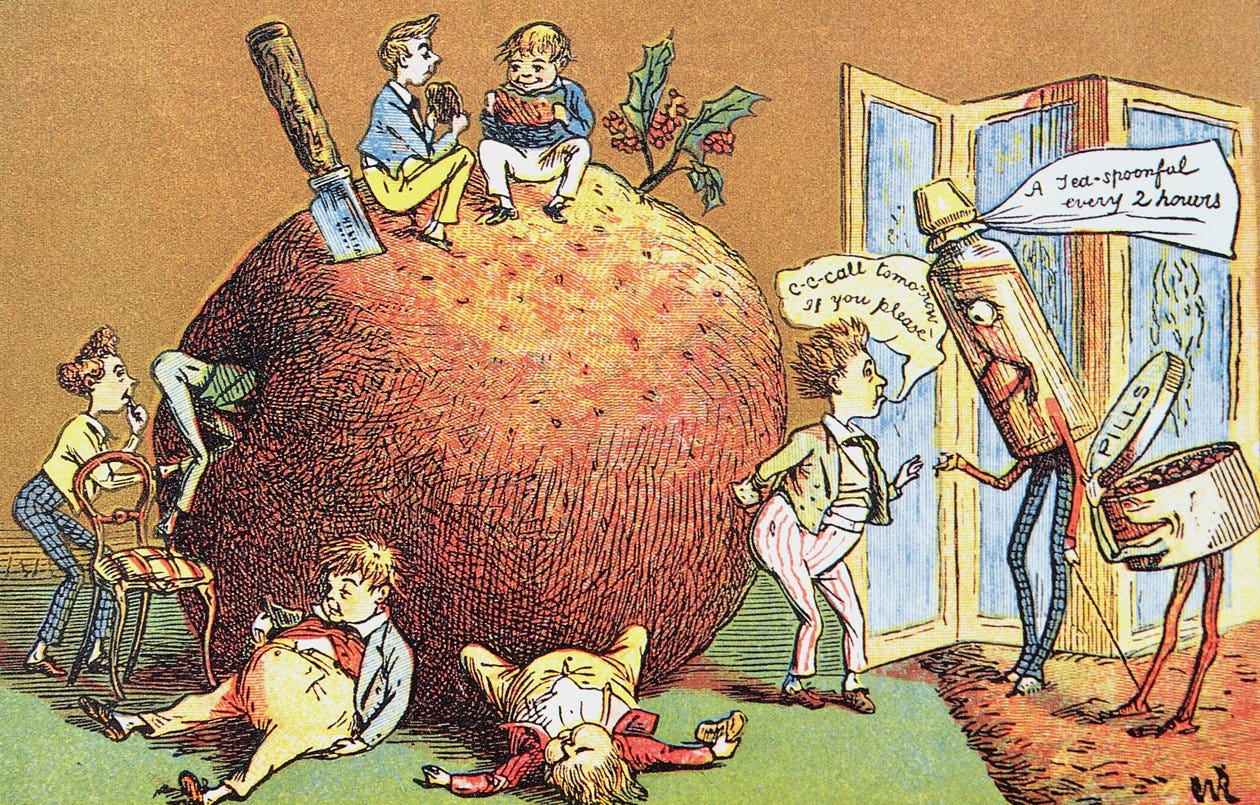
Christmas pudding is essentially the Victorian-era standardization of plum pudding, enriched with dried fruits, spices, and alcohol and traditionally steamed—made famous by Charles Dickens, whose A Christmas Carol helped cement it as the centerpiece of the Christmas table.
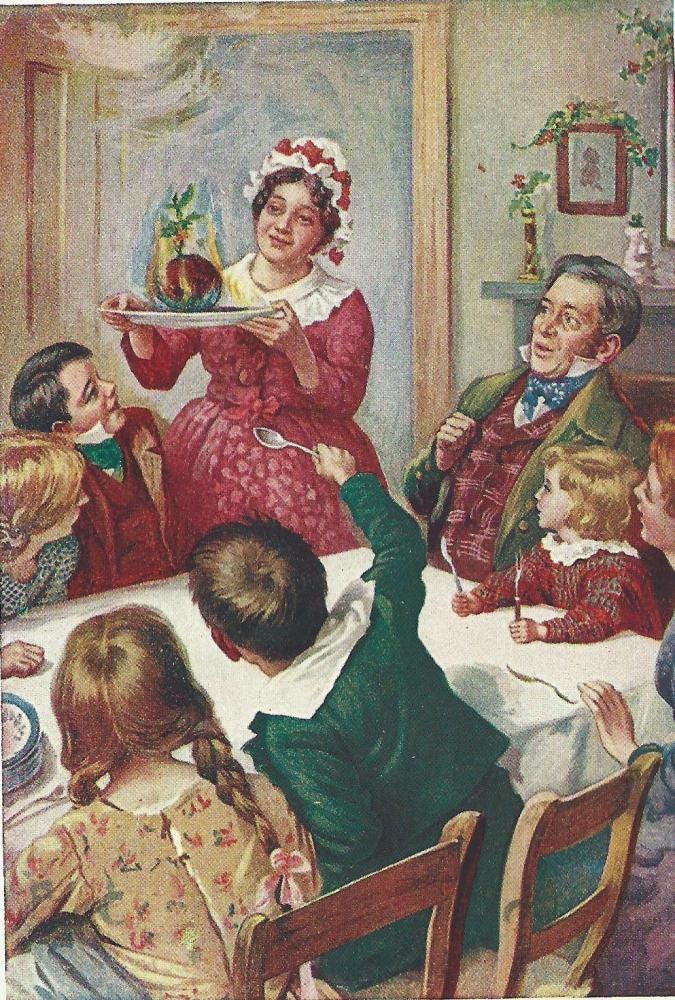
The Cratchit family's Christmas dinner from Charles Dickens' novel A Christmas Carol. Sticky toffee pudding, a much later invention dating to the mid-twentieth century, shows how the word pudding continued to evolve. Made with dates, flour, and sugar and served warm with sauce, it shares nothing with the original sausage-based preparations except the inherited name.
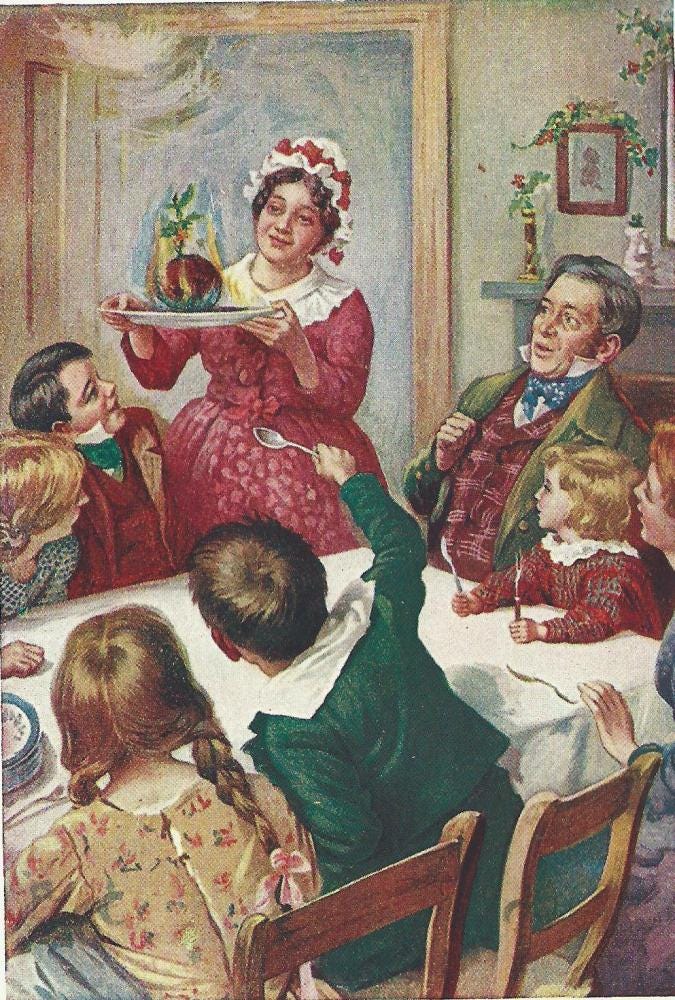
So while puddings retained their dense, steamed structure, their contents evolved.
In fact, by the late nineteenth and early twentieth centuries, pudding took on a new meaning—especially in the United States. There, it increasingly referred to a soft, custard-like dessert made with milk, sugar, and a thickener such as chicken’s eggs and eventually cornstarch (known as cornflour in the U.K.).
As refined starches and refrigeration became common, home cooking shifted away from long boiling and steaming toward quicker stovetop methods. By the mid-twentieth century, packaged products like instant pudding fixed this definition in American culture. What Americans now call pudding would generally be called custard in the United Kingdom.

“The Proof of the Pudding Is in the Eating”
This long—and sometimes risky—history of pudding also gave rise to one of the English language’s most frequently misquoted expressions: “the proof of the pudding is in the eating.” Today, it’s often shortened to “the proof is in the pudding,” but that version misses the original meaning entirely.
Historically, proof didn’t mean “evidence” the way we use it today. It meant “testing.” When puddings were meat-based, stuffed into casings, and boiled, you couldn’t always tell by sight whether a pudding was safe to eat. As the history of foodborne toxins makes clear, that test sometimes came at a very high cost.
The full expression meant that you could only truly know the quality of a pudding by eating it—the eating was the test. Given what puddings once contained, this wasn’t metaphorical wisdom. It was practical advice.
The story of pudding reminds us that food traditions are not static. They evolve. And so do we. Enjoy my suet-free, animal-free, botulism-free Christmas pudding recipe here, and Merry Christmas!
Modern Nourishment
Holiday foods have a way of bringing us together, reminding us of the rituals and flavors that connect us. And this season, as we cook and share and celebrate, I’m also thinking about how essential it is for each of us to tend to our own well-being.
Even with a nutrient-rich plant-based diet, we can thrive even more with thoughtful support. That’s where Complement comes in, I take Complement Essential as my daily multivitamin for B12, D3, iodine, zinc, and magnesium; Omega Complex for essential fats; and as part of my strength-training and muscle-building routine, I fuel up with their clean Organic Protein.
Complement your diet and and get 15% off everything you order—every time you order—using THIS LINK and the code: JOYFULVEGAN.
Additional Resources
👉 Connect with me 1:1 – Get personalized guidance whatever you are looking for.
👉 Read A Year of Compassion – Daily inspiration to help you live with intention, kindness, and clarity.
👉 Travel with me! I host animal-friendly, luxury, all-inclusive vegan trips around the world, specifically curated to ensure high-quality, high-touch premium experiences. Check out our upcoming trips, and let me know if you have any questions.
👉 Check out my Recipe E-Books and my library of On-Demand Cooking Classes for recipes for the holidays and beyond!
I would love to hear your thoughts, and thank you for sharing this article!
Very interesting! Lots of information in your article that I did not know. So thankful for the evolution of puddings!
So interesting! I love your history of food articles and podcasts, always learn something new.