


Just a friendly reminder that if you hit the heart ❤️ at the top or bottom of this post, it helps others discover this publication! 🙏

Thanksgiving can be a tough time for vegetarians and vegans (and even harder for the turkeys)—not because delicious autumnal food isn’t abundant this time of year, but because the cultural rhetoric is dominated by talk of baked turkeys, roasted turkeys, leftover turkeys, and—just when you thought it couldn’t get any worse—turducken, an increasingly popular dish in which a chicken is stuffed into a duck, who is then stuffed into a turkey (and sometimes wrapped in bacon).
Scholars have spent a lot of time discerning exactly what was served in 1621, when 90 Wampanoag Indians gathered for a three-day feast with 52 colonists in what is now Plymouth, Massachusetts. Although they can’t be 100% certain of the menu, it’s safe to say that turducken wouldn’t have been on it.
What Was Really on the 1621 Table?
Romanticized notions rather than historical facts shape how we think about Thanksgiving—and what we put on the menu. This is especially true when you look at what is considered “traditional Thanksgiving food,” how it came to be such, and the stories we’ve created about what we consider the “First Thanksgiving.” In reality:
The main dish was not a centerpiece roasted turkey. While wild turkeys roamed the area, primary accounts highlight five deer brought by the Wampanoag along with ducks, geese, and local fish and shellfish.
If cranberries were on the table, they would have been enjoyed raw, lightly sweetened with maple sap, or valued for their vibrant red color—not cooked with refined sugar as we eat them today. (It would be 50 more years before colonists documented boiling the berries with sugar.)
Potatoes hadn’t even arrived in New England yet, so nobody was enjoying mashed, baked, sweet, or whipped potatoes.
Sweet orchard apples—not native to North America—were not even in the region at the time.
And even if they had an oven in which to bake them, pies, tarts, and cakes were unlikely to be on the menu given the lack of wheat flour and butter.
Oh, and forks were not used as an eating utensil yet. They wouldn’t become common at American tables until the late 1700s.
Vegetarians and vegans are often accused of “breaking tradition” for not eating turkeys at Thanksgiving, yet if historical accuracy is the true measure of tradition, anyone eating bread stuffing, sweet cranberries, apple cobbler, pumpkin pie, buttermilk biscuits, or potatoes topped with butter and marshmallows is breaking tradition with every bite—and doubly so if they’re using a fork.
Does that mean we should give up mashed potatoes, apple pie, or forks just because they weren’t at the “First Thanksgiving”? Of course not. The point is that we all selectively choose what belongs on our dinner tables, especially on this holiday.
We’re all breaking tradition if we use that 1621 gathering as our touchstone.
Traditions Are Touchstones, Not Rulebooks
Of course, it’s absurd to think any of us would try to mimic the past down to the last detail. Throughout our lives, we continually choose which customs to uphold based on what feels convenient, healthful, or ethical today. We carry forward what resonates, reshape it into our own traditions, and leave behind what no longer serves us.
It’s called being human.
Staged reenactments can briefly bring history to life, yet we treat them as quaint performances rather than blueprints for daily living. Traditions are meant to be touchstones, not strict rulebooks. Our desire for connection to the past always outweighs any urge to perfectly replicate the past.
We adapt customs constantly, so leaving turkeys off the Thanksgiving table is nothing new. People are simply shaping traditions around their own values and tastes—the exact way turkeys became the centerpiece in the first place. Someone arbitrarily elevated that bird because it was familiar to her, and that “someone” was a very real person with a very specific agenda, an influential 19th-century American writer, poet, and pioneering magazine editor.
How One Woman Invented Our Holiday Menu
The menu we associate with Thanksgiving was largely conceived by Sarah Josepha Hale (1788–1879), who spent decades lobbying U.S. presidents to make Thanksgiving an official American holiday. As the editor of the hugely influential Godey’s Lady’s Book (and author of “Mary Had a Little Lamb”), she had the ideal platform to advance her vision.
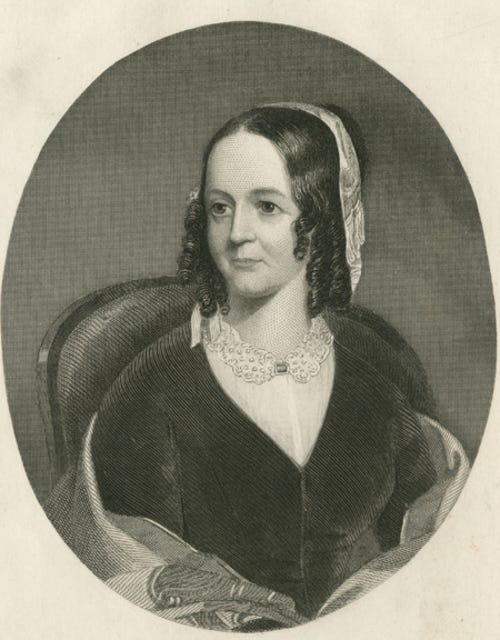
To win over her readers, Hale romanticized the events and menu of what she imagined to be the “First Thanksgiving.” She published recipes and illustrations for roasted turkeys, pumpkin pies, mashed potatoes, and biscuits—none of which would have been served in Plymouth, Massachusetts, in 1621.
Her persistence paid off in 1863, when President Abraham Lincoln issued a proclamation establishing Thanksgiving as a national holiday in the midst of the Civil War. More than a century and a half later, the menu Hale curated for that autumn feast still defines our holiday table.
The High Cost of a Modern Myth
Fast-forward to the mid-twentieth century, when a USDA breeding program produced the Beltsville Small White. Shoppers wanted flesh without dark pinfeathers showing after plucking, so breeders selected for white plumage. By 1965, the much larger Broad-Breasted White had nearly taken over the turkey market, and the reason is right there in the name. The white feathers made for cleaner-looking flesh at the meat counter, and the bigger breasts meant more meat. In fact, these birds have been bred to have such obscenely large breasts that they generally can’t mate naturally and are bred by artificial insemination.
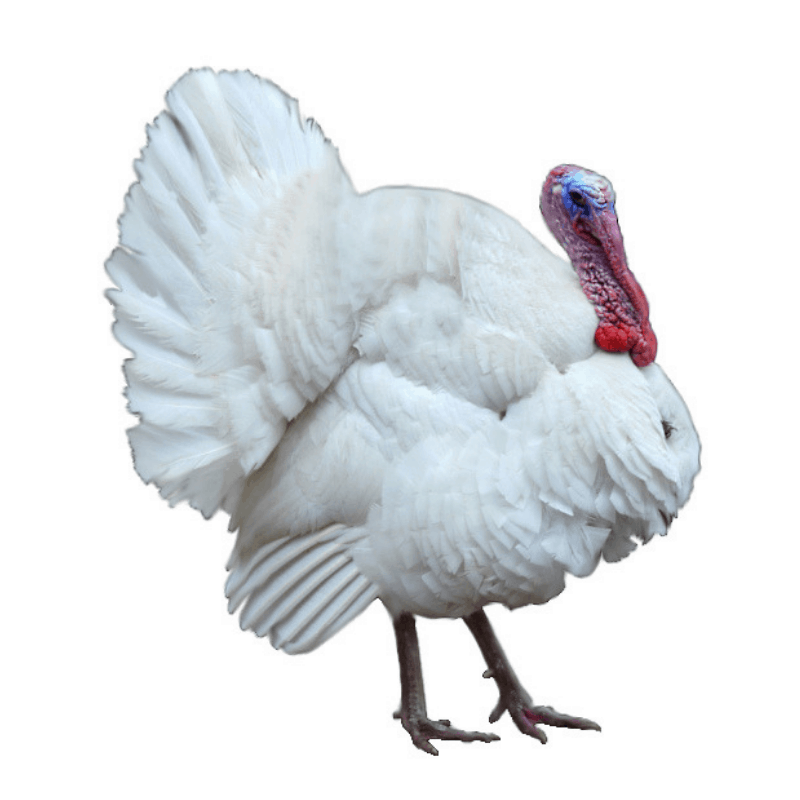
Fast-forward to the mid-twentieth century, when a USDA breeding program produced the Beltsville Small White. Shoppers wanted flesh without dark pinfeathers showing after plucking, so breeders selected for white plumage. By 1965, the much larger Broad-Breasted White (pictured above) had nearly taken over the turkey market, and the reason is right there in the name.
The white feathers made for cleaner-looking flesh, and the bigger breasts meant more meat. In fact, these birds have been bred to have such obscenely large breasts that they can’t mate naturally and are bred by artificial insemination. Today, the industry breeds turkeys into existence—only to kill them—on a staggering scale. In 2026 alone, the USDA projects that nearly 199 million turkeys will be killed.
Reclaiming the Spirit of Gratitude

For the English colonists and Wampanoag Indians, that first gathering was a celebration of food and feasting and an occasion for praising God and the Three Sisters (corn, beans, and squash), respectively. Before Hale’s mythologizing of that First Thanksgiving, it was considered a simple regional holiday celebrated solemnly through fasting and quiet reflection—quite a bit different from the gluttonous and commercial celebrations of today.
Though Sarah Josepha Hale did a great disservice to turkeys, she did have noble ideas about the meaning of this holiday. She envisioned that it would be about charity and generosity. In her magazine she wrote, “Let us consecrate the day to benevolence of action, by sending good gifts to the poor and doing those deeds of charity that will, for one day, make every American home the place of plenty and of rejoicing.”
We shape our traditions out of our ideals, just as Sarah Josepha Hale shaped the Thanksgiving menu out of hers. She selectively chose what belonged on the table—and we can do the same, recognizing that there is no contradiction between eating compassionately and honoring tradition.
Whatever meaning we attribute to this holiday, it is most certainly not lost—in fact, it is enhanced—by creating food-based rituals that affirm rather than take life, that demonstrate compassion and empathy rather than selfishness and gluttony, and that celebrate the fact that neither our values nor an animal need be sacrificed in order that we should eat.
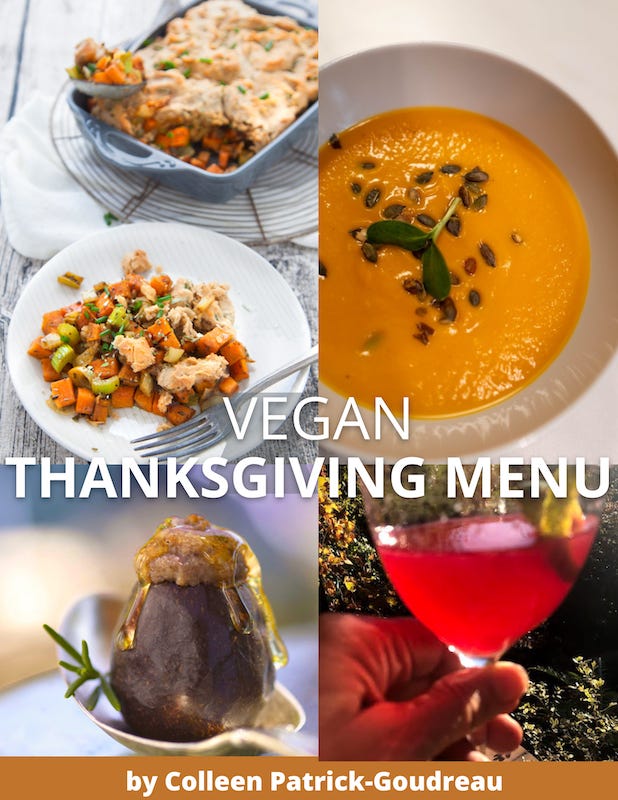
BTW, I’ve got you covered for your traditional Thanksgiving dinner. This special bundle of 10 recipes gives you a full menu of starters, sides, main dish, desserts, and even a cocktail!
Deviled Potatoes
Sweet and Spicy Pumpkin Soup
Vegetable Pot Pie
Mashed Potatoes with Kale
Apple Cranberry and Sausage Stuffing
Shredded Brussels Sprouts and Apples and Pecans
Onion Gravy
Figs Stuffed with Rosemary and Walnut-Cashew Cream
Chocolate Cake with Coffee Ganache
Cosmopolitan Cocktail and Mocktail
Additional Thanksgiving recipes can be found in the on-demand classes Thanksgiving Feast I and Thanksgiving Feast II.
My Favorite Supplements
Even with a nutrient-rich plant-based diet, we can thrive even more with thoughtful support.
That’s where Complement comes in. I take Complement Essential as my daily multivitamin for B12, D3, iodine, zinc, and magnesium; Omega Complex for essential fats; and as part of my strength-training and muscle-building routine, I fuel up with their clean Organic Protein.
With Complement and my nutrient-rich diet, I have everything I need to fuel my body, support my strength, and thrive so I can do my work in the world for animals—both human and non-human.
Get 15% off everything you order—every time you order—with the code JOYFULVEGAN.
Additional Resources
👉 Connect with me 1:1 — Get personalized guidance on whatever you’re working toward. (One one-on-one session is also a perk of the Founding Member/VIP level here on Substack.)
👉 Read A Year of Compassion — Daily inspiration to help you live with intention, kindness, and clarity.
👉 Travel the World Vegan Style! I’ve partnered with World Vegan Travel to bring you luxury, all-inclusive vegan trips around the globe. Whether I’m personally hosting or not, every itinerary is curated for a high-quality, premium experience. Check out upcoming trips, and please remember when booking to write in that you heard about them from COLLEEN PATRICK-GOUDREAU. 😊
Very interesting history. Thank you, CPG!