


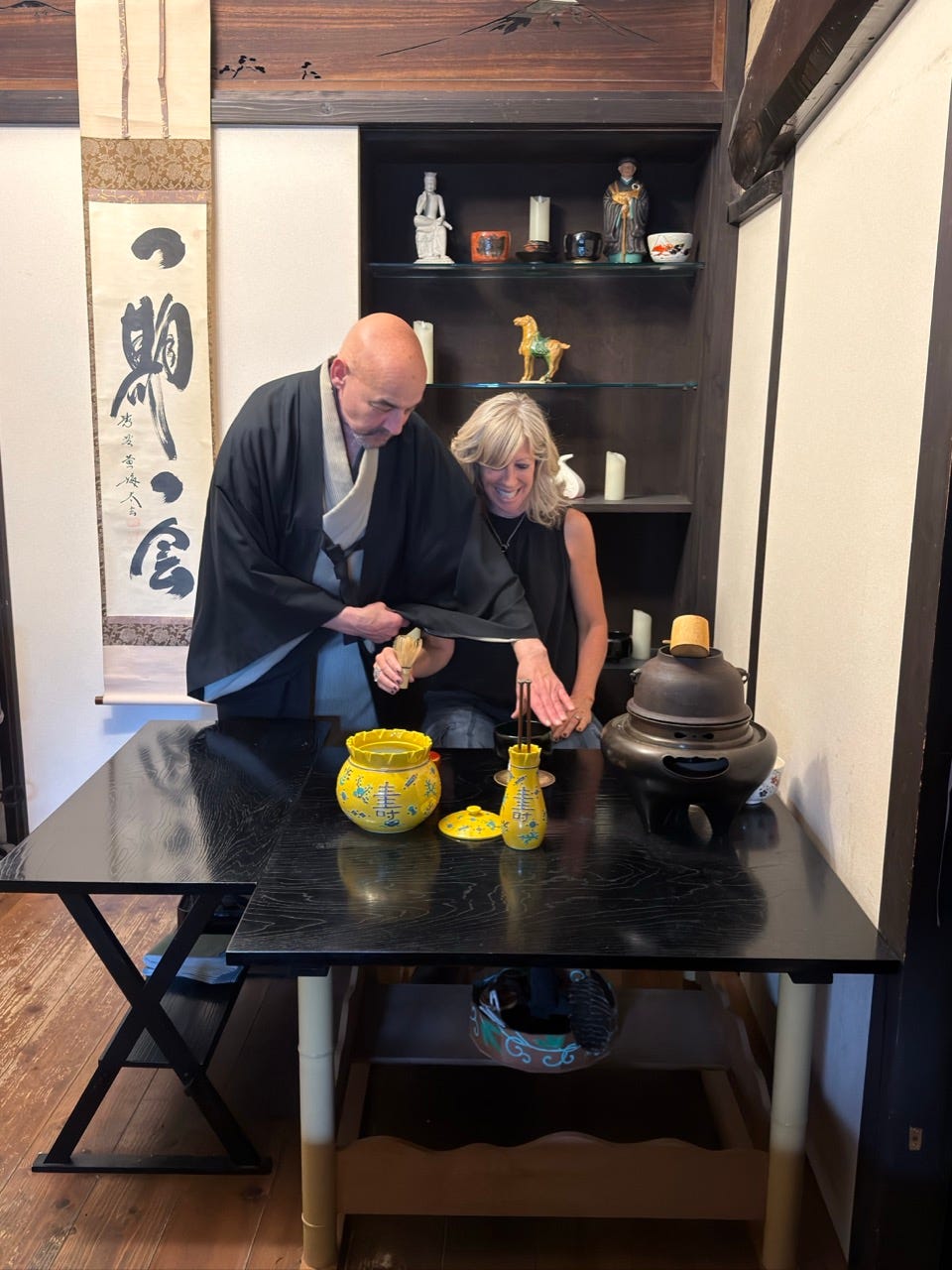
As a lifelong student and lover of tea, I am thrilled to be further immersing myself in the ‘Way of Tea’ here in Japan. I’m currently back in the country hosting two groups, and as this is my fifth time leading tours here, I always make it a point to dive deeper into a new layer of the culture. This year, tea has been my focus.
I have so much to learn, but here are some ‘tea-keaways’ I want to share with you.
The Beauty of Imperfection
First of all, to understand the Japanese tea ceremony—or Chanoyu—is to understand the heart of Japan itself. While tea originally came over from China with Buddhist monks over a thousand years ago, it was here in Japan that it evolved from a simple medicinal drink into a spiritual practice.
The man who transformed it was Sen no Rikyū. In the 16th century, he took tea away from the decadent gold-plated displays of the elite and moved it toward a philosophy called Wabi-cha, which encapsulates the notion of embracing imperfection and finding beauty in simplicity.
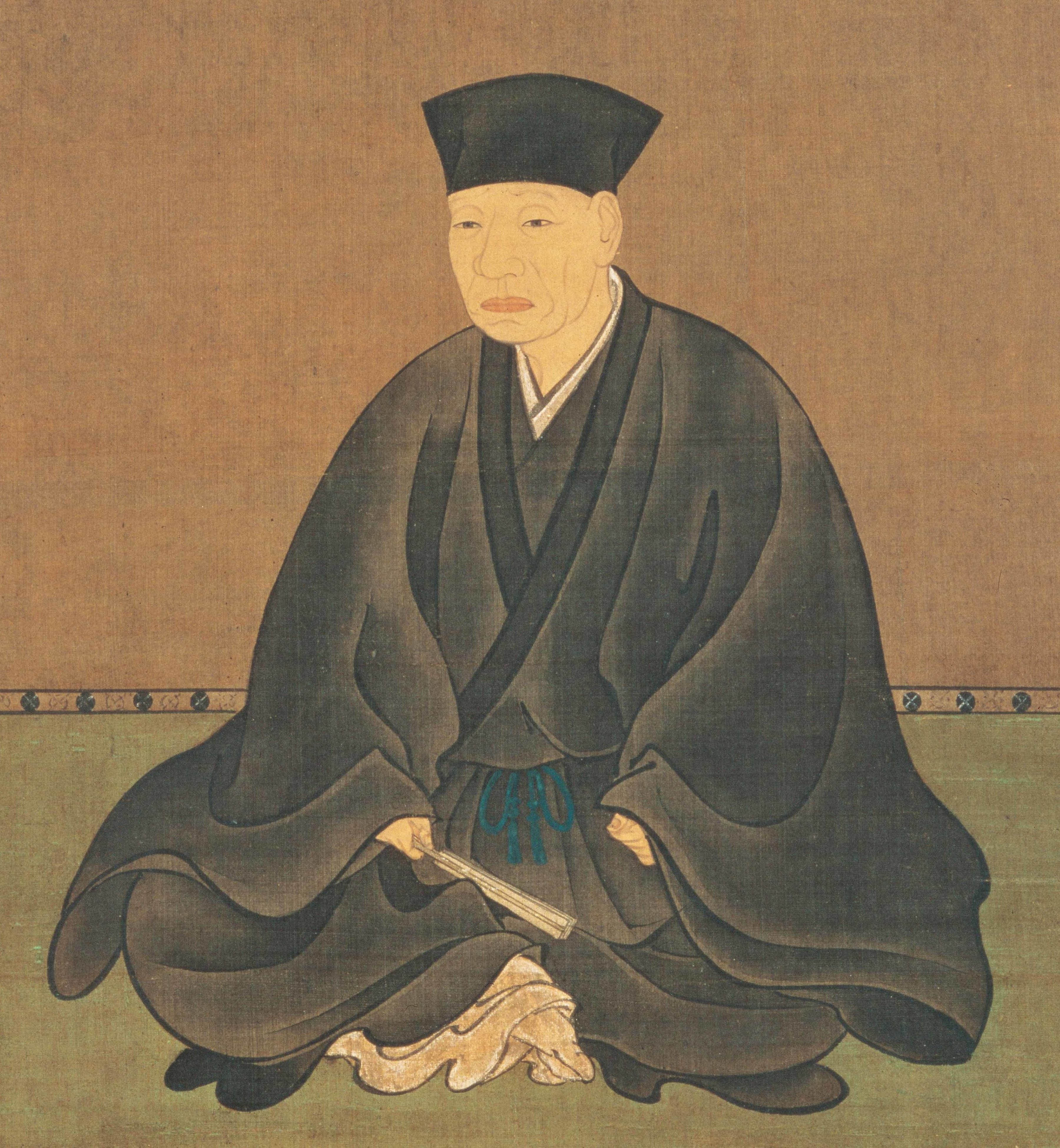
You’ve most likely heard of Wabi-sabi—the popular philosophy of finding beauty in the imperfect. Wabi-cha was the actual “Way of Tea” Rikyū created to bring that philosophy to life.
He was the one who decided that a cracked, hand-molded clay bowl was more “perfect” than a flawless piece of expensive porcelain.
He is the reason bamboo whisks and earthy ceramics are used today, demonstrating that even in the most humble surroundings, one could find perfection.
He found divinity in the “simple,” and in doing so, he shifted the entire Japanese aesthetic toward valuing the natural and the unrefined.
Ironically, it was this very devotion to simplicity that caused his downfall. His refusal to bow to the opulent, golden tastes of the ruling warlord, Toyotomi Hideyoshi, eventually led to his forced ritual suicide, or seppuku. Rikyū chose to die for his aesthetic rather than compromise it for a man who famously built a tea room made of solid gold.
Though that is a story for another time, you can understand it a little more if you’re interested in reading up on Rikyū, but I’d also recommend checking out a few movies about him. A few I’d recommend:
Rikyu (1989) – This one is a classic and really focuses on that clash between the artist and the politician.
Death of a Tea Master (1989) – Released the same year, this one focuses more on his final days.
Ask This of Rikyu (2013) – A more modern take that focuses on the objects and the “heart” of his tea.
The 7 Rules of Tea
There is so much to say about what Rikyū did to change tea, but let’s talk about one of the most enduring things he left us: The 7 Rules of Tea (Rikyū Shichi Soku).
Legend says that when a student asked Rikyū to reveal the deep secrets of the ceremony, the Master simply gave him these seven instructions. The student was unimpressed, complaining that they were far too basic and that anyone could follow them. Rikyū famously replied that if the student could actually live by these seven rules without fail, Rikyū would happily become his student!
Of course, these were meant for the tea room, but they can be applied beautifully to life:
1. Make a satisfying bowl of tea
This is the most fundamental rule, representing the core philosophy of the ceremony. It means the host's primary goal is to prepare tea with devotion and sincerity, ensuring the guest finds true satisfaction in both the taste and the experience. Of course, in life, it’s a reminder to do things with intention; whether you’re making a meal or making a phone call, do it in a way that truly nourishes the other person.
2. Lay the charcoal so the water boils efficiently
Focus on the essentials. We often overcomplicate our lives with unnecessary fluff and performance. This rule teaches us to be practical and purposeful—do what is necessary for the result you want, and let go of the rest. It reminds me of something Marcus Aurelius wrote in Meditations: “Ask yourself at every moment, ‘Is this necessary?’”
3. Provide a sense of coolness in summer and warmth in winter
This is the heart of hospitality. It’s about being sensitive to the needs of others before they even have to ask. It’s a call to be empathetic and to adjust our presence to bring comfort to those around us.
4. Arrange the flowers as though they were in the field
I always assumed the flowers in a tea ceremony were Ikebana (the famous Japanese art of flower arrangement), but on this trip, I learned they are actually Chabana. While Ikebana is complex and formal, Chabana is its simpler, "wilder" cousin. The goal is to respect the natural essence of the flower, making it look as if it’s still growing in the wild. It’s a beautiful lesson in authenticity—letting ourselves and others shine in our natural state rather than a manicured one.
5. Be ready ahead of time
In the tea room, this means having every detail prepared so the host is never flustered. As someone who hosts a lot, this rule resonates with me, as I always prefer to have everything ready before guests arrive, but I also put a lot of pressure on myself to have everything perfect. This rule is about preparation but also about creating space between the act of preparing and the act of greeting. Punctuality is respect, but it’s also about inner peace. By being truly "ready," we create the mental space to be fully present for the people we are with, rather than just catching our breath as they walk through the door.
6. Be prepared for rain even if it is not raining
In a tea ceremony, this means having everything ready for any sudden change in conditions so the guest's experience remains seamless. It isn’t about being a pessimist; it’s about having the inner fortitude and flexibility to stay calm when the “weather” changes. Life is unpredictable, but if you have your "umbrella" ready, a sudden downpour is just part of the scenery, not a disaster. It allows you to remain steady and present, no matter what happens.
7. Act with utmost consideration toward your guests
At the end of the day, everything in the tea room—and in life—is about connection, the foundation of my work. Rikyū taught the concept of Ichigo Ichie, which translates to "one time, one meeting." It’s the idea that this specific moment, with these specific people, will never happen exactly the same way again. When we realize that every encounter is a once-in-a-lifetime event, every interaction becomes an opportunity to show genuine kindness and presence.
It’s been so rewarding to spend this time in Kyoto learning and understanding more, and I’m so glad to be able to bring these pieces of the journey back to you. Something that drew me to tea many years ago was not just the drink itself but about how the act of serving, hosting, drinking, and sharing mirrors life and our relationships with one another.
I hope you enjoyed these "tea-keaways" as much as I enjoyed discovering them. Below is a little video from one of our experiences, but I have much more to share!
Self-Care Beyond Tea
Even with a nutrient-rich plant-based diet, we can thrive even more with thoughtful support. That’s where Complement comes in, I take Complement Essential as my daily multivitamin for B12, D3, iodine, zinc, and magnesium; Omega Complex for essential fats; and as part of my strength-training and muscle-building routine, I fuel up with their clean Organic Protein. With Complement and my nutrient-rich diet, I have everything I need to fuel my body, support my strength, and thrive so I can do my work in the world for animals — both human and non-human.
Complement your diet and and get 15% off everything you order—every time you order—using THIS LINK and the code: JOYFULVEGAN.
Additional Resources
👉 Connect with me 1:1 – Get personalized guidance whatever you are looking for.
👉 Read A Year of Compassion – Daily inspiration to help you live with intention, kindness, and clarity.
👉 Check out my Recipe E-Books and my library of On-Demand Cooking Classes for recipes.
👉 Travel the World Vegan Style! I’ve partnered with World Vegan Travel to bring you the best in luxury, all-inclusive vegan trips around the globe. Whether I am personally hosting or not, every itinerary is curated for a high-quality, premium experience. Check out upcoming trips, and please remember when booking any trip to mention you heard about them from COLLEEN PATRICK-GOUDREAU. 😊

Love this! While I'll always be a coffee girl, I love this ritual and intention associated with tea drinking that can also be used for life.