


Thank you for clicking the heart ❤️ at the top or bottom of this post, so others can discover this publication! 🙏
This article is part of my ongoing series called Rewilding Your Yard for Wildlife and Biodiversity.
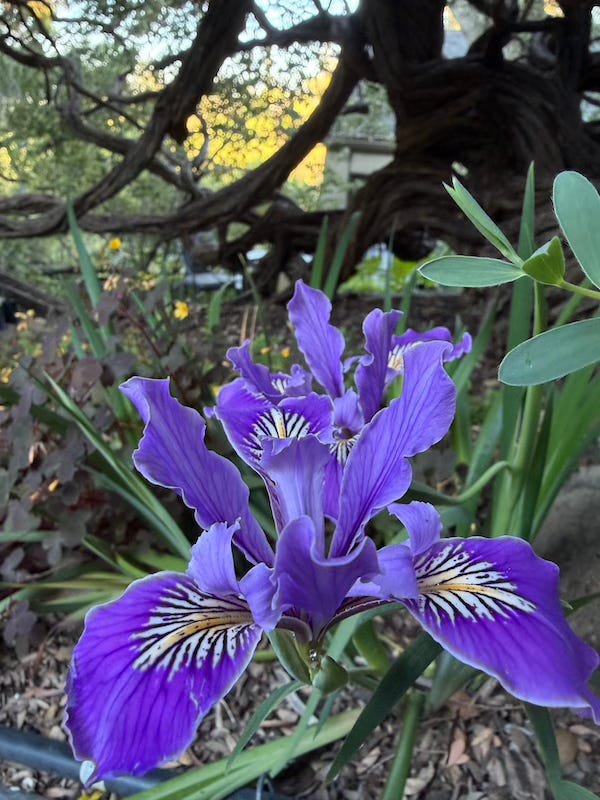
Today is the first day of spring, and I hope it’s not my last.
I have no reason to think it will be—other than the fact that I’m alive, and life is fragile.
While winter reminds us that death is inevitable, spring reminds us that life persists, even amidst chaos and violence and vulnerability.
And so, I’m here to see another spring, and for that I am grateful.
This spring is especially meaningful for me because I am now officially a Pollinator Steward! While all of us are—or can be—pollinator stewards if we provide plants for pollinators (and extra points if those plants are native to our region), I’m “official” because I received my Pollinator Steward certification from the Pollinator Partnership, a leading organization dedicated to protecting pollinators and their habitats.
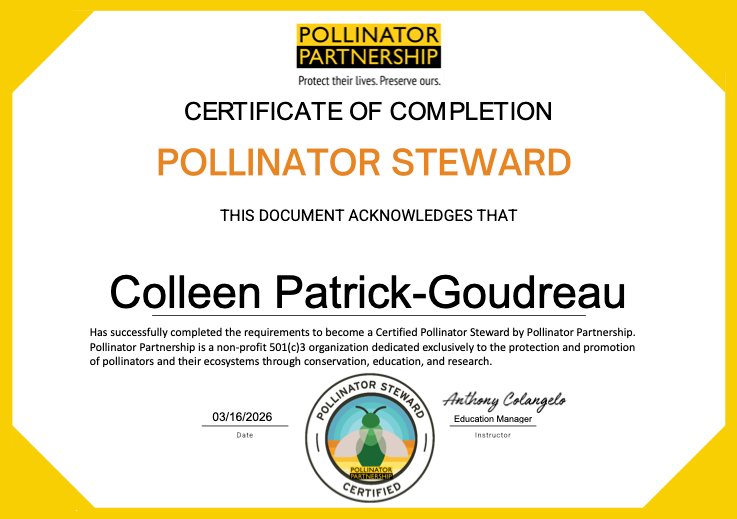
I took the course last year, learned a ton, and met the criteria of creating a pollinator habitat on my property and in my community. I’ve been sharing a lot about the former, and I alluded to the latter in my last post—how I worked with my neighbor to extend our native plants (many of which support pollinators) onto his property, so these important insects, birds, and other wildlife have more continuous habitat, food, and places to breed and lay eggs.
I’m so proud and kind of obsessed.
I’ve been spending hours every day outside (very grateful for our California weather)—planting, weeding, cleaning, observing, learning, tweaking, watering—sweating. And it’s been worth every ache, every cut, every bead of sweat. Your flowers will be different than mine, of course (unless you also live in California), but I wanted to share some of the blooms that have just emerged. (And there are still many more to come!)


Milkweed and Monarchs
I don’t have the right equipment (or skills) to photograph the insects benefiting from these native plants, and I’m still learning to identify who’s who. I’m also trying to get native milkweed to thrive, and I’ve been only somewhat successful. I hope the little I have—and I’ll keep trying—is enough to sustain the many monarch butterflies I see every day, both in our garden and throughout our neighborhood, feeding on the nectar of the flowers now blooming all around.
Monarchs can feed on many flowering plants. Any garden full of nectar-rich blooms can sustain them during breeding season. But they can only lay their eggs on one kind of plant: milkweed.
And I don’t see it anywhere—except at one house a few blocks away. And I walk these streets every day.
There’s food, yes—but no nursery. No place for the next generation, which is why monarchs are in decline.
So if there’s one simple takeaway from all of this: it’s this: Plant milkweed. And not just any milkweed — milkweed native to your region.
That is my call to action. And I will do the same—so they can live to see another spring, and I can be here to witness it. May it be so.
Additional Resources
👉 Connect with me 1:1 – Get personalized guidance whatever you are looking for. (One one-on-one connection is also a perk of the Founding Member/VIP level here on Substack.)
👉 Read A Year of Compassion – Daily inspiration to help you live with intention, kindness, and clarity.
👉 Travel with me! I host animal-friendly, luxury, all-inclusive vegan trips around the world, specifically curated to ensure high-quality, high-touch premium experiences. Check out our upcoming trips, and let me know if you have any questions.
👉 Check out my Recipe E-Books and my library of On-Demand Cooking Classes for recipes.
Speaking of Sustaining Life
Even with a nutrient-rich plant-based diet, we can thrive even more with thoughtful support. That’s where Complement comes in, I take Complement Essential as my daily multivitamin for B12, D3, iodine, zinc, and magnesium; Omega Complex for essential fats; and as part of my strength-training and muscle-building routine, I fuel up with their clean Organic Protein. With Complement and my nutrient-rich diet, I have everything I need to fuel my body, support my strength, and thrive so I can do my work in the world for animals — both human and non-human.
Colleen, thank you for sharing this valuable info. I was thrilled to learn that the majority of those Ca native plants and flowers listed are not highly attractive to the deer. I will definitely add some pollinator plants to our yard.