


Did you know that if you hit the heart ❤️ at the top or bottom of this post, it helps others discover this publication? Thank you in advance! 🙏
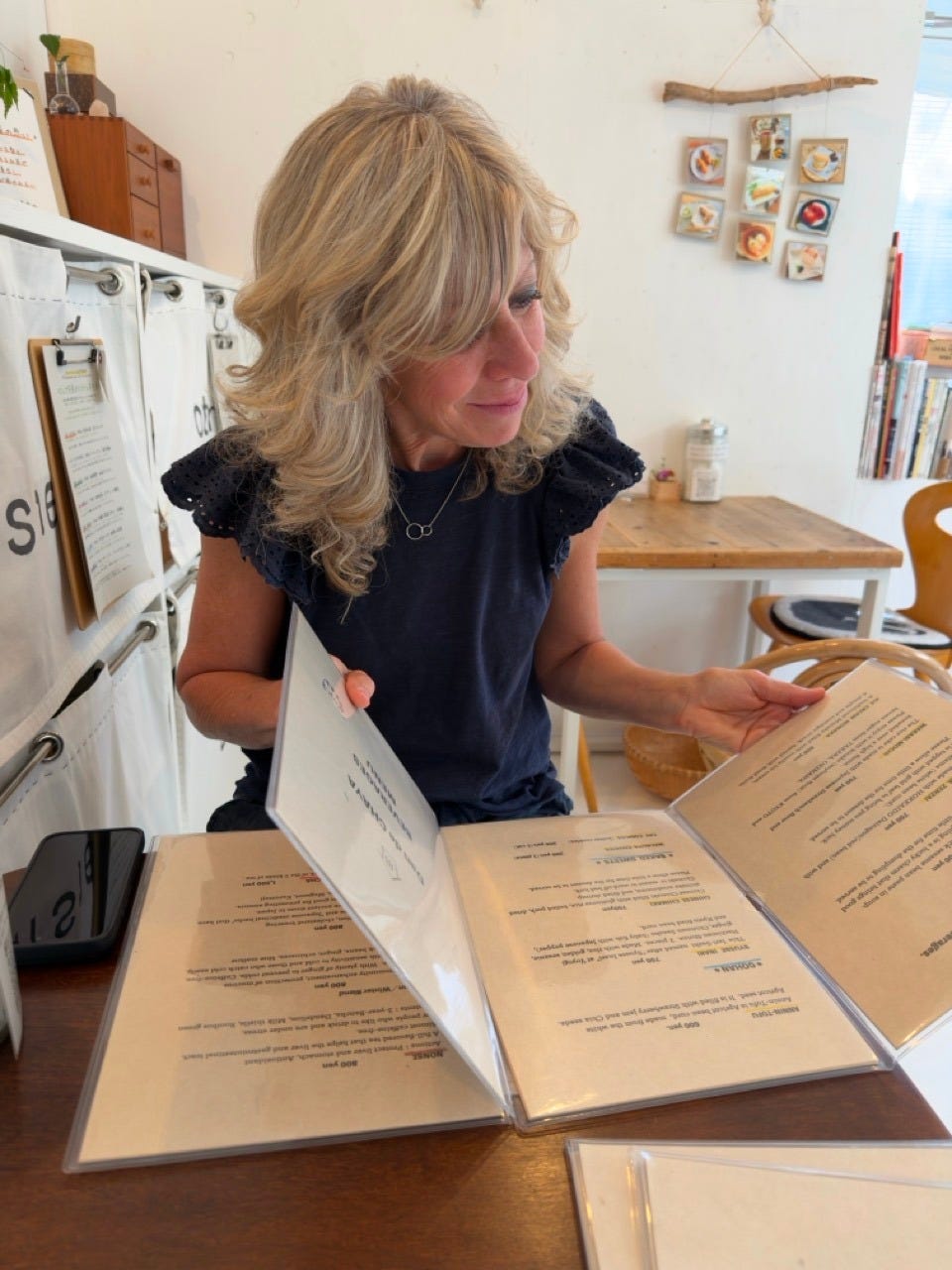
We’ve all been there. We walk into a restaurant, and the first thing we ask is: “Do you have vegan options on your menu?” The server says, “Absolutely we do! In fact, we have a separate vegan menu just for you.”
You’re thrilled. You feel special. You feel seen.
But what feels like a thoughtful accommodation is actually a velvet rope—one that keeps the general public out.
After three decades of advocating for animals and exploring the power of language to do that as effectively as possible, I’ve come to a conclusion that might surprise you: We should not advocate for vegan-only menus.
While our goal may be to normalize the consumption of plants and to move toward a more compassionate world, research shows that the way restaurants market vegan options inadvertently leads to fewer people choosing plant-based dishes over animal flesh and fluids.
Now, before you get your broccoli in a bunch, I’m not saying we should never use the word “vegan.” I am saying that we need to look at what research shows is most effective for influencing what people actually choose to order from a menu if we actually want to change behavior.
Many restaurants see the value in accommodating vegans as well as non-vegans, but having a chef who knows how to make delicious plant-based fare is just one ingredient in the recipe. If we want these items to actually sell to more than just a minority of diners, we have to look at how they are marketed to the general public.
While our goal may be to normalize the consumption of plants and to move toward a more compassionate world, research shows that the way restaurants market vegan options inadvertently leads to fewer people choosing plant-based dishes over animal flesh and fluids.
Why Separate Menus Act as a Barrier
We tend to think that a separate menu is a convenience, but in the world of social psychology, it’s a wall. When a restaurant hands out a “Vegan Menu,” it may make vegans feel special, but if a diner doesn’t identify as “vegan,” they won’t even look at that list—let alone ask for it.
This effectively removes the plant-based options from the consideration of 95% of customers. Isolation ensures that only the already converted ever see the options, which is the opposite of normalization.
I don’t want to live in an exclusive vegan club; I want people who don’t identify as “vegan” to eat plants and not animals. The more we make it seem like eating plant-based foods is exclusive to vegans, the more we are sabotaging the very thing we care about.
Integration is the Key to Normalization
The most effective thing a restaurant can do is stop segregating the plant-based options. Incorporating plant-based items directly into the main menu—placing the plant-based burger right next to the beef burger—ensures it is seen by 100% of the customers and removes the “otherness” of the dish.
If we want the items to sell, they need to be in the line of sight of every person opening the menu.
When the food is integrated, it just becomes part of the menu. Period. It sends the message that these dishes are for everyone, not just a subset of people.
(To be clear: the default should be that every dish is integrated and those free of animal products are clearly marked. If a restaurant wants to offer an additional vegan menu as a supplement, that’s fine—as long as it’s a supplement, not the only place those dishes live.)
But visibility is only half the battle. For these items to actually move, the marketing—what the dishes are called—has to be as attractive as the placement (and taste, of course).
The “Vegan” Deterrent
While I understand wanting to demystify the word “vegan,” the fact is, labeling a dish as “vegan” can actually lead to lower sales among non-vegans. Research shows that for many people, the word “vegan” triggers a “deprivation” mindset—they think about what is missing (meat, dairy, eggs) rather than what is actually there.
To the general public, “vegan” is often seen as a restrictive, “members-only” label. By using descriptions like “plant-based” in the fine print—or a small, unobtrusive symbol like a leaf or a “V”—we trust that the dish can stand on its own merits without triggering that psychological barrier that the word “vegan” can invoke.
It turns out that descriptors related to taste, texture, and enjoyment are what actually drive sales. When a menu uses words like “decadent,” “smoky,” “rich,” “creamy,” or “crispy,” it isn’t just describing the food—it’s selling the experience.

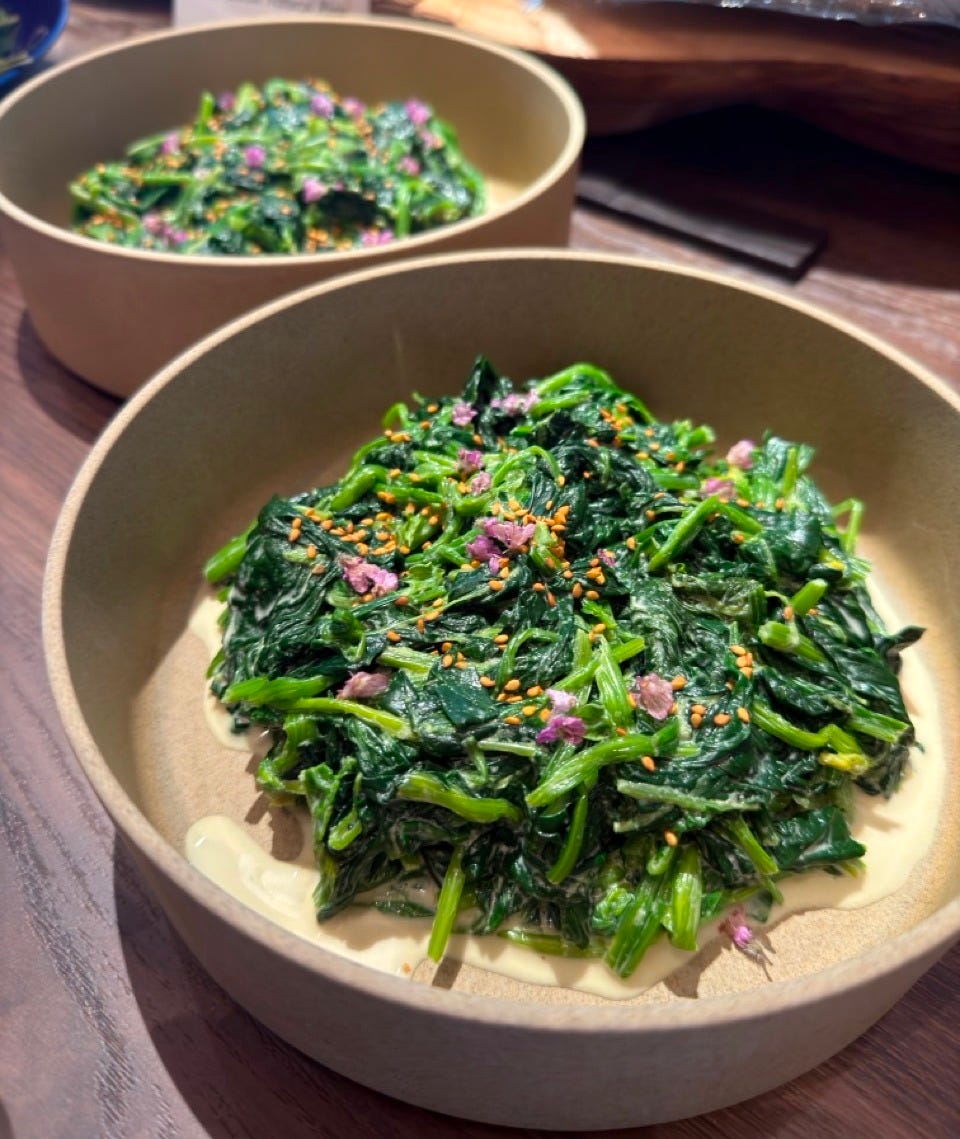
The name of a dish is the best chance a restaurant has to grab someone’s attention. Think about it: a customer is far more likely to choose “Zesty Chile-and-Citrus-Roasted Asparagus” over plain “Roasted Asparagus.” They’ll choose “Tangy Ginger Broccoli and Smoky Shiitake Mushrooms” long before they’ll order a side of “Broccoli and Mushrooms.”
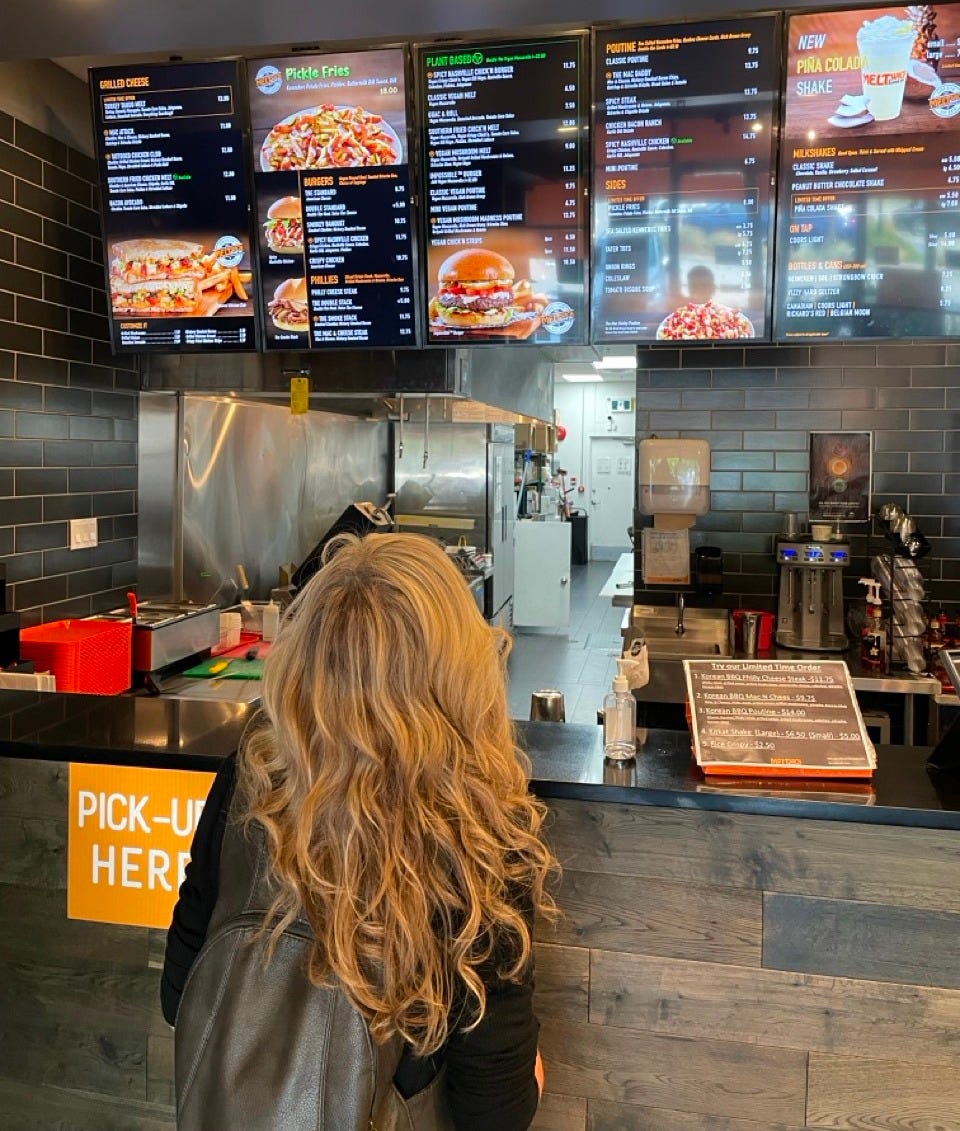
Even titling a plant-based burger “Impossible Burger” or “Beyond Burger” is much more effective than calling it a “Vegan Burger” or “Veggie Burger.” If it’s not a commercial patty, the restaurant can call it something exciting like “Smoky Grilled Grain Burger” or “Mexican Bean Chipotle Burger” .
This is exactly what we should be encouraging restaurants to do: move toward a world where plant-based food is simply seen as the most delicious thing on the menu.
(More) Suggestions for Restaurants
Once plant-based items are on the menu and marketed correctly, restaurants can further increase sales by using a psychological tool social psychologists have understood for a long time: our ingrained desire to conform to societal standards. You can actually change a person’s behavior simply by highlighting that other people have already changed theirs.
It’s social peer pressure for good!
As I discuss in my book, The Joyful Vegan: How to Stay Vegan in a World That Wants You to Eat Meat, Dairy, and Eggs, a study led by researchers at Stanford University proved exactly how effective this is. They worked with a burger restaurant to add a simple, unobtrusive message to the menu: “Our Meatless Burgers Are on the Rise.” On the credit card machine, they added: “We’ve noticed customers are starting to choose more meatless dishes.”
These two small interventions resulted in a significant increase in the sales of meatless dishes. It works because when a behavior is presented as a rising societal norm, our brains are wired to want to join in.
Finally, we should encourage restaurants to look at the “how” and the “what” of their plant-based offerings:
Increase the artistry: Studies show that the way food is plated actually enhances the perceived flavor. If a dish looks like a masterpiece, it sells like one.
Focus on familiar textures: Aside from plant-based burgers and nuggets, restaurants shouldn’t rely too heavily on seitan or tofu. For many non-vegans, these ingredients still carry negative associations. Using familiar, hearty plants—mushrooms, grains, beans, and roasted vegetables—lowers the barrier to entry.
These are small changes in tactics, but they could have a massive impact. By focusing on flavor and social norms instead of restrictive labels, we stop making plant-based food a novelty and start making it the main event.
So, have I convinced you? Let me know in the comments below!
Stay tuned for more on this topic. In subsequent articles, I’ll be sharing my thoughts (and the research) about:
Whether “vegan” or “plant-based” labels on packaging are more effective at influencing what people actually buy
How we identify ourselves and whether the words we use to describe our own identity inspire people to lean in or cause them to turn away.
Whether restaurants should actually use “vegan” in their name, or if doing so inadvertently keeps the very people we want to reach from walking through the door.
You can read more about these and other related topics in The Joyful Vegan, in my Food for Thought podcast, and here on my Substack!
Additional Resources
👉 Connect with me 1:1 – Get personalized guidance whatever you are looking for. (One one-on-one connection is also a perk of the Founding Member/VIP level here on Substack.)
👉 Read A Year of Compassion – Daily inspiration to help you live with intention, kindness, and clarity.
👉 Check out my Recipe E-Books and my library of On-Demand Cooking Classes for recipes.
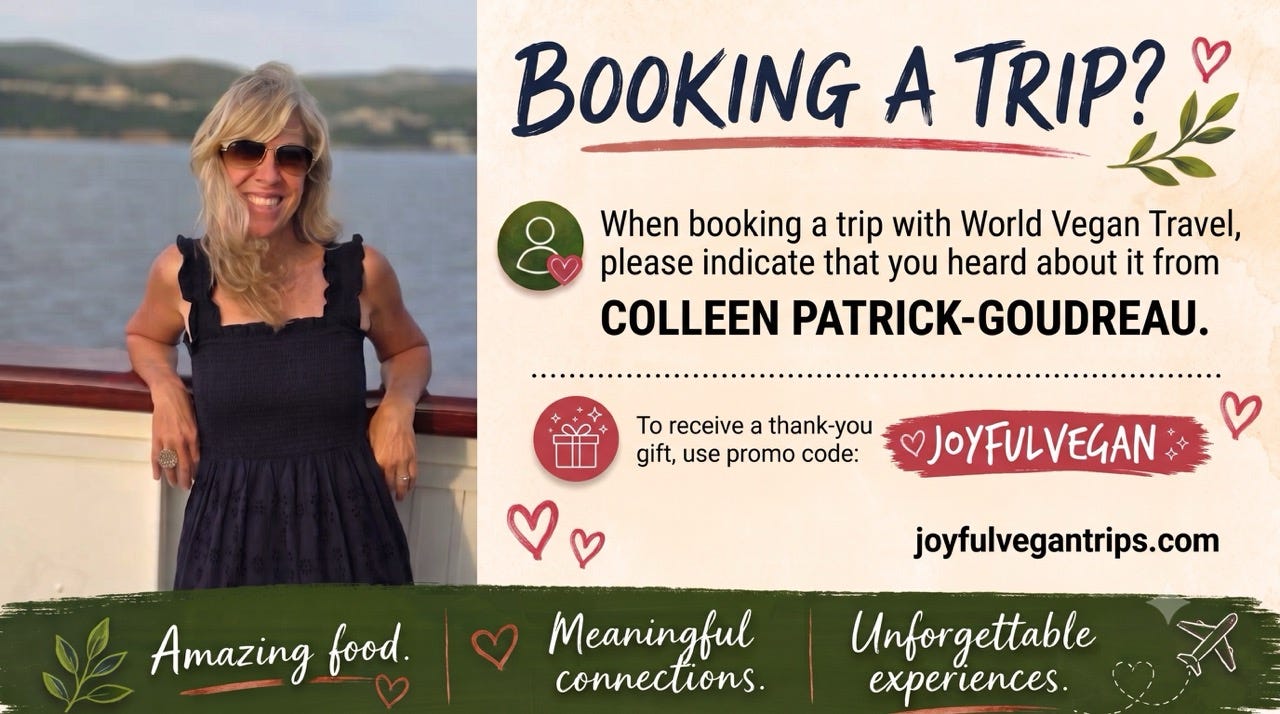
👉 Travel the World Vegan Style! I’ve partnered with World Vegan Travel to bring you the best in luxury, all-inclusive vegan trips around the globe. Whether I am personally hosting or not, every itinerary is curated for a high-quality, premium experience. Check out upcoming trips, and please remember when booking any trip to mention you heard about them from COLLEEN PATRICK-GOUDREAU. 😊
Speaking of Optimizing…
Even with a nutrient-rich plant-based diet, we can thrive even more with thoughtful support. That’s where Complement comes in, I take Complement Essential as my daily multivitamin for B12, D3, iodine, zinc, and magnesium; Omega Complex for essential fats; and as part of my strength-training and muscle-building routine, I fuel up with their clean Organic Protein. With Complement and my nutrient-rich diet, I have everything I need to fuel my body, support my strength, and thrive so I can do my work in the world for animals — both human and non-human.
Complement your diet and and get 15% off everything you order—every time you order—using THIS LINK and the code: JOYFULVEGAN.

Thanks so much for reading. Please share this article with others, and leave a comment below. I’d love to hear your thoughts!
Great article, Colleen! I’ve heard about this before and I’m glad you’re bringing it to more people’s attention. It’s hard to not have mixed feelings because I’m grateful if a restaurant cares enough to have a vegan menu. One place had a vegan menu AND integrated the vegan options into the full menu. Do you think that is the gold standard or am I missing a downside (besides the cost and effort of creating the menu)?
I’m excited about your upcoming topics. I love getting into details that could make a difference. One thing I’m unsure about is telling people I’m vegan. First I need to decide if it’s even worth it. For example, my barber occasionally mentions grilling chicken, eating eggs, etc. and so far I haven’t said anything. When I do tell someone I’m vegan, I feel self conscious about how I say it and how I think I’m coming across or any preconceived notions they might have. I’m sure I’m overthinking it as I tend to do, but I’m also sure it must cause some anxiety in others as well.
This is a whole new way of looking at a menu. I really liked what you said!