


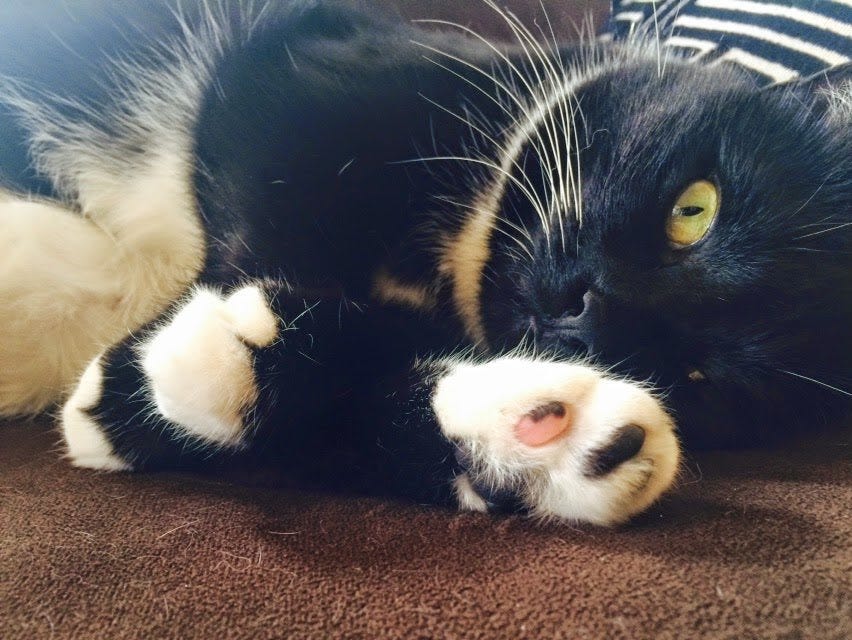
As Halloween approaches, I am exploring why black cats have become so synonymous with this holiday. What’s the history behind this association, and how can we challenge the myths and stereotypes that continue to shape how we see these animals? This article is one of many in my Halloween series, which also includes:
Homemade Halloween Treats (For Trick-or-Treaters or to Enjoy at Home)
Animal-Themed Halloween Movies (That Don’t Promote Violent Against Animals)
Halloween: A Brief History
First and foremost, let’s take a quick look at Halloween and what it’s all about.
Halloween’s roots can be traced back over 2,000 years to the Celtic festival of Samhain (pronounced “SOW-in”). Samhain was celebrated in what is now Ireland, the United Kingdom, and northern France and marked the end of the harvest season and the beginning of winter or the “darker half” of the year.
It was seen as a liminal time — when the boundary between the living and the dead was blurred, when the “spirits” or “fairies” could more easily come into this world and were particularly active. The souls of the dead were also said to revisit their homes seeking hospitality, and places were set at the dinner table and by the fire to welcome them. The belief that the souls of the dead return home on one night of the year and must be appeased seems to have ancient origins and is found in many cultures.
In Christianity from the 4th century, feasts commemorating Christian saints and martyrs were held in various places by various churches on various dates, mostly in springtime; but in 837 Pope Gregory IV ordered the official observance of All Saints Day every November 1 and extended its celebration to the entire Church.
There are different theories as to why this date was chosen, but it certainly makes sense that honoring the dead at this time of year — in the winter when it was the time when things died, when nature went to sleep — was something that resonated with Christians, just as it had with the Celtic-speaking peoples who commemorated the dead at the beginning of winter.
For this observance, it was a common custom for Christians to begin their liturgical celebrations the night before All Saints Day, which came to be known as All Hallows Eve (from hallow, which means “holy,” and een, which is an abbreviation of “evening”).
Obviously, this later became the word Halloween.
Later on, Christian missionaries introduced All Souls’ Day on November 2, which perpetuated the idea of the living coming into contact with the dead around the same time of year.
And so these three days (All Hallows’ Eve, All Saints’ Day, and All Souls’ Day) are collectively called Allhallowtide — a time when Western Christians honor all saints and pray for recently departed souls who have yet to reach Heaven.
Halloween was eventually brought to North America by European immigrants, particularly the Irish, Scottish, and Welsh. During the 20th century, the observance largely became a secular one, which has continued to evolve.
The modern imagery of Halloween comes from many sources and has developed over the centuries, including symbols related to themes of death, witches, and their common cohorts — black cats.
Black Cats: From Reverence to Superstition
But how have black cats become associated with witches and Satan and Halloween? When did this start? How far back can we trace this association? What are the social and cultural implications and consequences of such an association?
For the record, while black cats have positive associations in Celtic-speaking nations and in Japanese folklore, in most Western cultures, black cats have typically been looked upon as a symbol of evil omens, specifically suspected of serving as witches’ familiars, or actually being shape-shifting witches themselves.
Most of Europe considers the black cat a symbol of bad luck, particularly if one walks across the path in front of a person, which is believed to be an omen of misfortune and death. And this goes back hundreds of years to the Middle Ages, when these dark felines were considered a symbol of the Devil himself.
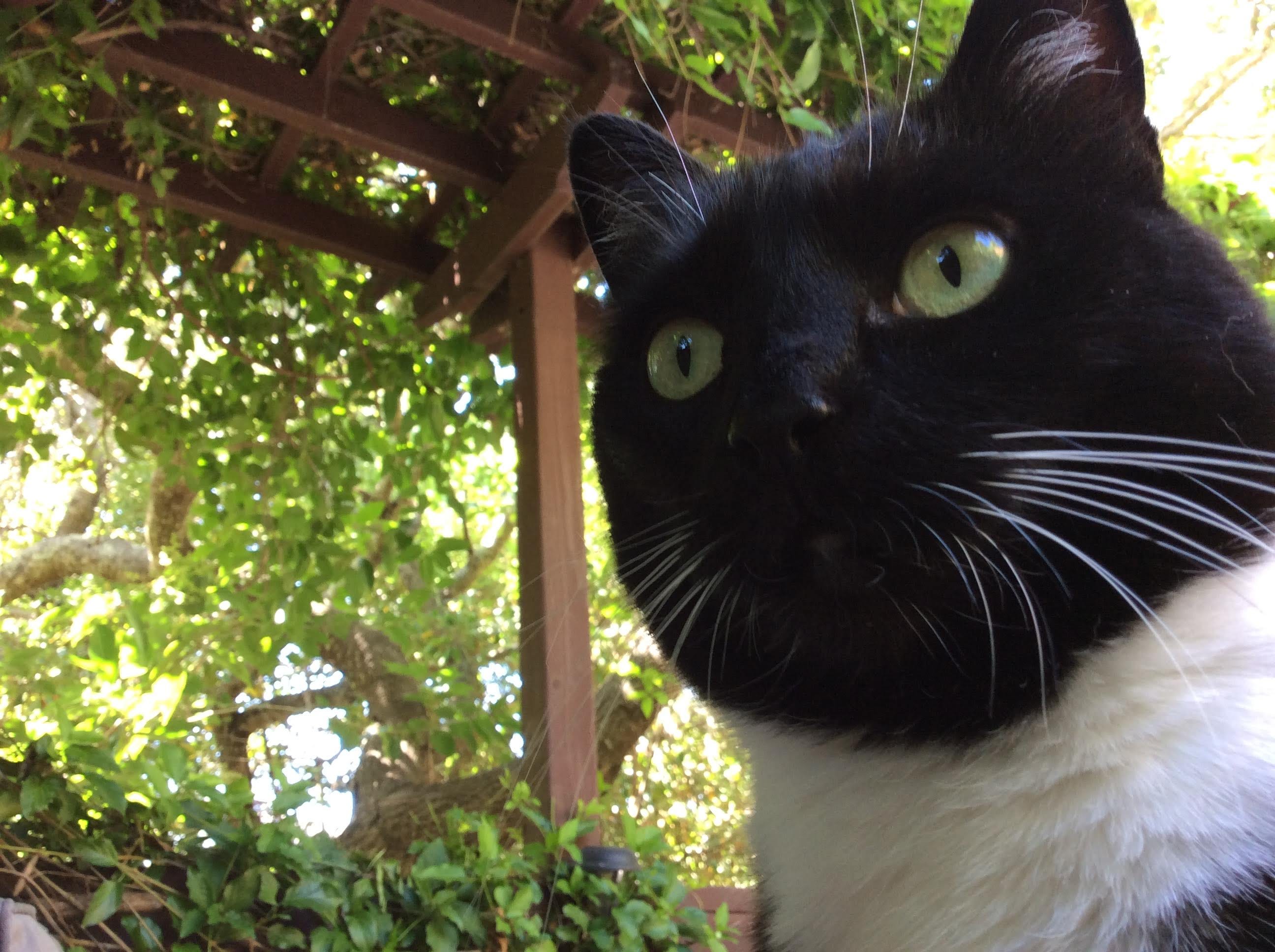
It didn’t help that centuries later, accused witches were often found to have cats, particularly black ones. People began to believe that the cats were a witch’s “familiar” — supernatural entities that would assist in their practice of dark magic — and so black cats and nefarious behavior have been linked ever since.
But let’s go back a little bit. Have black cats been the only cats to historically be considered suspect? Were tabby cats also seen as the Devil’s minions? Grey cats? Orange cats?
The short answer is…cats of all colors have historically been regarded with suspicion. Regardless of their color (and eventually their breed), cats have long been both revered, misunderstood, and maligned.
Historical Connections Between Cats and Humans
The bonds between humans and cats can be traced to some of the world’s earliest civilizations, with ancient Egypt standing out as the most known even among those of us not versed in ancient Egyptian history.
Ancient Egypt: Cats as Sacred Animals
In ancient Egypt, cats held a sacred status, with the goddess Bastet frequently portrayed in feline form, occasionally embodying the qualities of a powerful lioness. The act of harming a cat was strictly prohibited, and according to the Greek historian Herodotus, when a domestic cat passed away, it would lead to a household-wide period of mourning, including the shaving of eyebrows.
Deceased cats were brought by families to the revered city of Bubastis for mummification and burial in consecrated repositories.
Ancient Rome: Cats as Symbols of Freedom
When it came to the ancient Romans’ opinion of the cat, on one hand, the domestic cat lacked the qualities of duty, obedience, and loyalty that the Romans highly valued. On the other hand, the cat inherently embodied traits of freedom, independence, and autonomy, which were qualities that the Romans unmistakably admired.
In that vein, the Romans regarded the cat as a symbol of freedom, representing the goddess Libertas (Latin for “liberty” or “freedom”), who was a minor but widely worshiped Roman deity.
Ancient Greece: A More Complicated Relationship
Cats are infrequently mentioned in ancient Greek literature, although Aristotle observed in his History of Animals that female cats possess a naturally “lecherous” disposition. The Greek essayist Plutarch associated cats with cleanliness; Pliny connected them with lust, while Aesop linked them with cunning and deviousness.
Subsequently, the Greeks blended their own goddess Artemis with the Egyptian goddess Bastet, eventually transferring Bastet’s cat-related attributes to Artemis.
In Ovid’s Metamorphoses, during the gods’ flight to Egypt and their transformation into animal forms, the goddess Diana (the Roman counterpart of Artemis) takes on the form of a cat.
However, the cat’s symbolism took on a darker meaning in Greek mythology due to its connection with Galinthias, who was transformed into a cat by the goddess Hera and who subsequently served Hecate, the Greek goddess of the underworld.
So, a mixed bag in the ancient world, but it turns pretty dark as we get to the Middle Ages.
Cats, Women, and Witches
During the Middle Ages, cats were generally disapproved of — at best, tolerated because of their adeptness at controlling “vermin,” and, at worst, perceived as agents of darkness and devils.
One of the most enduring beliefs was that black cats were witches’ familiars, aiding them in their dark arts. But we need to unpack this more, because it wasn’t simply that cats had a poor reputation because they were associated with witches — it’s really that they were associated with women.
For thousands of years, cats have been seen as feminine creatures. In ancient Egypt, the cat goddess Bastet was associated not only with warfare but also with motherhood and fertility. The Norse goddess Freyja was believed to have a chariot pulled by large cats, and in general cats have been considered protectors and nurturers, just as human women are.
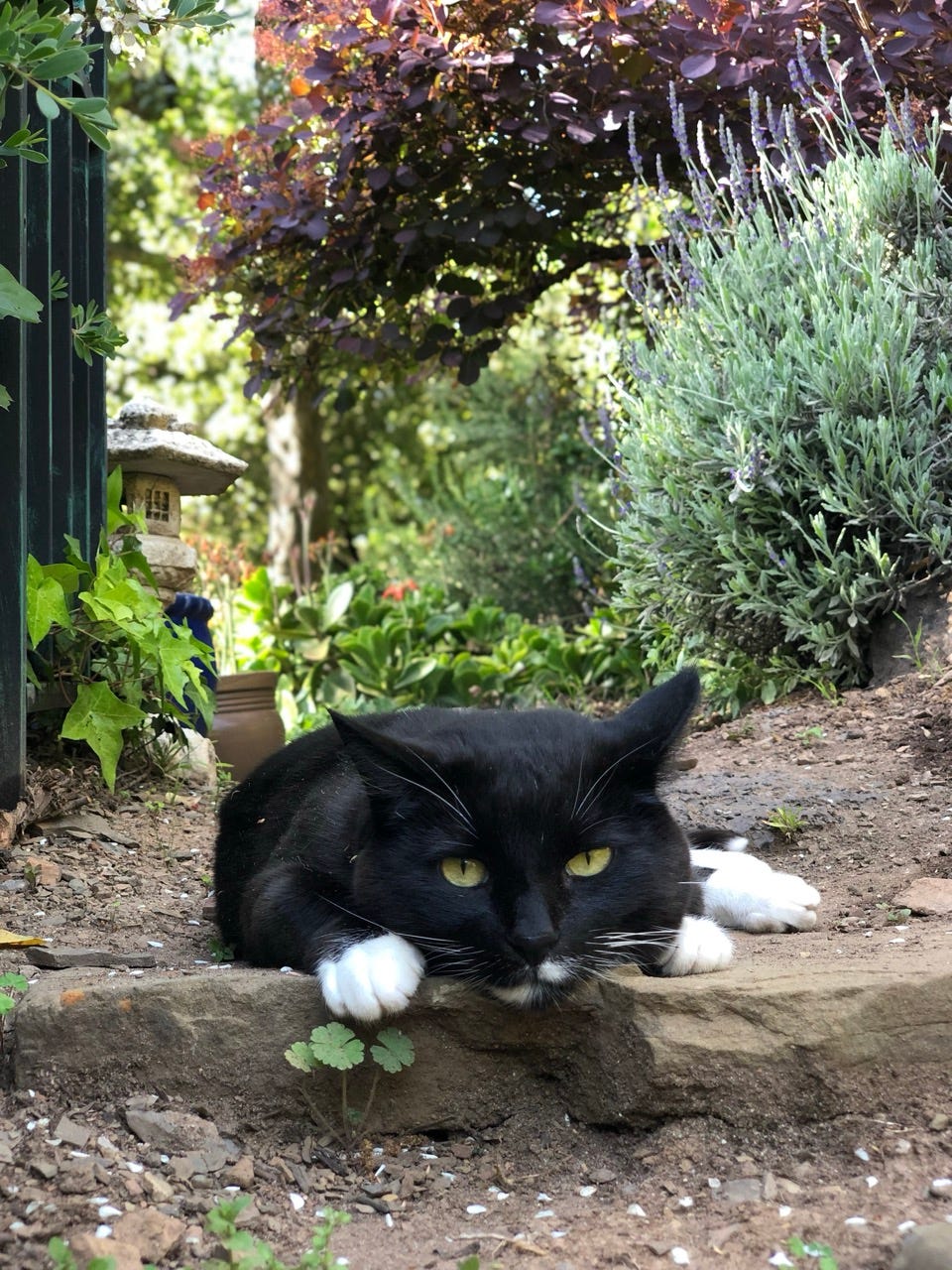
What’s more, being nocturnal animals, cats are associated with the moon, with the night — both of which are considered feminine. Cats are also perceived as independent and mysterious creatures endowed with intuition, enigmatic allure, and a connection to the unknown — traits traditionally attributed to the feminine. Even their bodies are seen as feminine — they’re sleek, they’re clean, they’re agile.
OK — that all sounds pretty good. Nothing about any of that is negative, you say, but it’s all negative given the poor light in which women and the feminine were perceived in the Middle Ages.
Prior to the popularization of the Cult of the Virgin Mary in the High Middle Ages (1000–1300), coupled with the French romantic tradition of courtly love, women were closely associated with Eve and the Fall of Man in the Garden of Eden. Women were considered innately sinful, lusty, and responsible for man’s first fall as well as whatever struggles each individual man after Adam had to endure.
Couple that with the negative associations of the sexuality of cats — they’re nocturnal, they play with their prey, their screams during copulation — equate that to women, and to the patriarchal culture of the Middle Ages, the cat — and women — are not to be trusted.
And so it follows that you have this association of cats with suspicious women, with solitary women, with witchcraft, with the dark arts, and it’s not a huge leap to cats and women witches being in cahoots with the devil — the devil that the early Christians genuinely feared.
Cats, like the women accused of witchcraft, tend to exhibit a healthy disrespect of authority. They don’t fawn, like dogs, upon even the unworthy. In the church, neither independent women, nor independent animals, were to be tolerated.
At some point, the pairing of witches with cats narrowed to black cats. Some people even thought witches were reborn as black cats, or that Satan himself turned into a cat when socializing with witches. So a black cat crossing your path might very well be on a mission from a witch. Or, it could be the devil in disguise.
This superstition has persisted and explains why a black cat crossing your path is still considered a bad omen.
Black cats were also thought to be involved in satanic rituals, which only added to their sinister reputation. And this is when we get to the legend that Pope Gregory IX issued a papal bull in the 1230s called Vox in Rama that declared cats as the instruments of Satan and ordered that all cats be killed — especially black cats, who were particularly Luciferian.
It’s a popular myth and a persistent myth and one that emerges from the church’s theological thinking around cats and around Satan and demons and such. After all, cats fly in the face of the Christian idea of God putting the natural world and its creatures here for humanity’s benefit. People can make all manner of animals do what we like, but you can’t really make a cat do anything.
And that — according to the medieval church — is because its body is invested with the spirit of the Morning Star himself. That is certainly how cats were often viewed, but is it true that the pope called for the culling of cats?
Did Pope Gregory IX Really Order the Killing of Cats?
One of the most persistent myths about cats in the Middle Ages is that Pope Gregory IX issued a papal bull in 1233 called Vox in Rama that declared cats instruments of Satan and ordered that all cats be killed — especially black cats.
But is that what actually happened?
During the 13th century, the Church was increasingly concerned with heresy and dispatched inquisitors throughout Europe to identify those suspected of deviating from Catholic doctrine.
One of them was Konrad von Marburg, who got a little too much pleasure from his job.
Through torture, terror, and intimidation, Konrad claimed to have uncovered a satanic cult in Germany whose members worshiped the devil in the form of a demonic man and a sinister black cat.
In response to Konrad’s allegations, Gregory issued Vox in Rama, denouncing the alleged rituals and urging authorities to take action against the supposed cult. And this is the document that has been cited over the centuries as evidence that Pope Gregory IX called for a cat genocide.
But there’s a big difference between what the document actually says and what people have claimed it says. Gregory was responding to the sensational allegations of an overzealous inquisitor whose account of satanic rituals was highly questionable.
The bull was not a call to kill all cats in Europe. It was a letter warning authorities about an alleged satanic cult in which a black cat featured prominently.
From Superstition to Companionship
While there appears to be no evidence that Pope Gregory IX ever called for a cat cull in Europe, that doesn’t mean cats were cuddled and revered. During the Middle Ages, cats were sometimes tortured and killed because of their association with “evil,” even as they were valued for controlling rats and mice in households, on ships, and in places where food was stored.
The negative perceptions surrounding black cats and their association with witchcraft persisted and made their way across the Atlantic, courtesy of Puritan colonists. Over time, these superstitions became intertwined with Halloween.
By the 18th and 19th centuries, however, attitudes toward cats were changing. Writers such as Samuel Johnson and Mark Twain celebrated cats as beloved companions, helping to popularize a view of cats that would have been familiar to the ancient Egyptians — and is certainly familiar to cat lovers today.
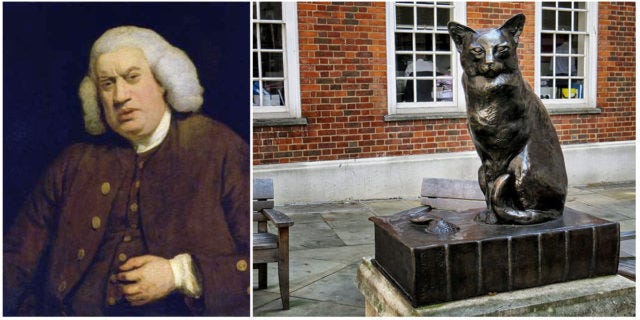
But while cats have become treasured family members, the old associations between black cats, witchcraft, and evil have never entirely disappeared. We still see them in Halloween decorations, scary stories, and the persistent belief that a black cat crossing your path brings bad luck.
And although black cats are among the many wonderful animals waiting for homes in shelters, they can still face disadvantages in adoption, particularly when shelters have large numbers of them.
Which brings us to what we can do to change the story.
How We Can Help Black Cats at Halloween — and Always
Promote awareness. Share information about black cats’ unjust stereotypes and challenge the idea that they’re sinister, unlucky, or associated with evil.
Support black cat adoption. Black cats — including black-and-white tuxedo cats — can face stereotypes and biases that affect how people perceive them. Encourage adopting these beautiful cats from shelters, especially around Halloween. You can be part of changing the stigma, even if you're not able to adopt cats yourself!
Take Halloween precautions. Encourage pet guardians to keep their cats safely indoors during Halloween to protect them from potential harm or pranks.
And just as importantly, let’s be mindful of how we portray black cats. Personally, I don’t include them in my Halloween decorations because I don’t want to perpetuate their association with darkness and evil.
Perhaps that’s one of the most meaningful things we can do: change how we talk about these animals, how we perceive them, and how we depict them. The stories we tell about animals have consequences for the animals themselves.
And we have the power to tell different stories.
In the next article, I’ll explore the history and superstitions behind other animals associated with Halloween, including crows, ravens, owls, bats, and spiders. Why did these animals become symbols of darkness, mystery, and fear?
Before You Go…
Even with a nutrient-rich plant-based diet, we can thrive even more with thoughtful support. That’s where Complement comes in, I take Complement Essential as my daily multivitamin for B12, D3, iodine, zinc, and magnesium; Omega Complex for essential fats; and as part of my strength-training and muscle-building routine, I fuel up with their clean Organic Protein. With Complement and my nutrient-rich diet, I have everything I need to fuel my body, support my strength, and thrive so I can do my work in the world for animals — both human and non-human.
Complement your diet and and get 15% off everything you order—every time you order—using THIS LINK and the code: JOYFULVEGAN.
Additional Resources
👉 Connect with me 1:1 – Get personalized guidance whatever you are looking for, including a special discount when you purchase a 3-session package.
👉 Read A Year of Compassion – Daily inspiration to help you live with intention, kindness, and clarity.
👉 Check out my Recipe E-Books and my library of On-Demand Cooking Classes for recipes.
👉 Travel the World Vegan Style! I’ve partnered with World Vegan Travel to bring you the best in luxury, all-inclusive vegan trips around the globe. Whether I am personally hosting or not, every itinerary is curated for a high-quality, premium experience. Check out upcoming trips, and please remember when booking any trip to add JOYFULVEGAN as the coupon code. 😊


Please share with a friend.
This was really, really interesting; thanks for sharing. I knew about the stigma against black cats in rescue, but had no idea it extended to tuxedos until we got our 🐈⬛, Zuma. I chose her by asking the local shelter who had been there the longest. In unison, everyone there said Zuma. I asked why and they said it was because she was a tuxedo 😿. To be honest, she was not doing a great job of selling herself either: in the back of her cage, staring wild-eyed at me while every other cat mewed and reached their paws out. All I can say about those who passed her over during her 6 months there is: SUCKERS! She is the best. cat. ever. 😻