


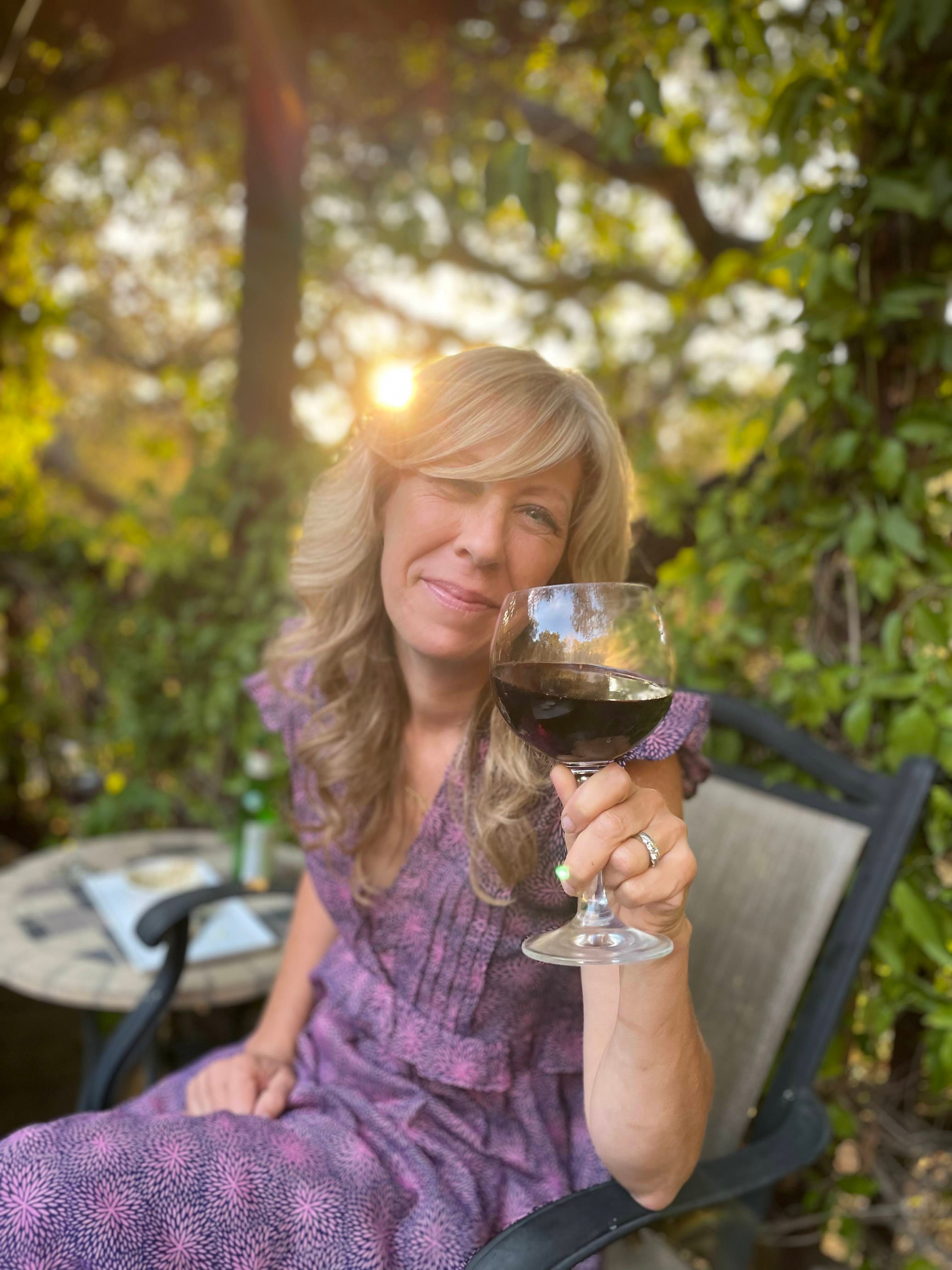
We’re lucky enough to live in California, where we’re anywhere from about 45 to 90 minutes from wineries in pretty much every direction — not to mention the wine bars, tasting rooms, and wine shops here in Oakland and across the bay in San Francisco. So over the years, we’ve done our fair share of wine tastings.
And invariably, as you’re tasting the wines, the person pouring — who genuinely wants you to have the best experience possible — will start suggesting foods that pair especially well with whatever wine is in your glass.
More often than not, the recommendations revolve around animal products.
“This Cabernet Sauvignon would be incredible with a grilled steak or braised short ribs.”
“This buttery Chardonnay really shines alongside roast chicken or creamy cheeses.”
“This Sauvignon Blanc pairs beautifully with oysters or a delicate white fish.”
“This bold red practically begs for a charcuterie board or aged cheese.”
And so on.
But here’s what’s really happening. When someone recommends “grilled steak” with a Cabernet Sauvignon, what they’re really getting at is char, smoke, richness, fat, savoriness, chewiness.
When they recommend “oysters” or “white fish” with a crisp white wine like a Sauvignon Blanc, what they’re getting at is salinity, brightness, delicacy, minerality.
And when someone says a bold red pairs well with “charcuterie” or “aged cheese,” what they’re really responding to is salt, fat, funkiness (yes, that’s an adjective used in the wine world), umami, depth, and intensity.
In other words, what pairs with wine are qualities, not categories of ingredients.
The Qualities Matter More Than the Source
And this is no different than what I’ve been saying for decades in response to people who say they “crave meat” or “crave cheese.” We don’t crave the flesh of other animals. We are not obligate carnivores. But we do crave fat, salt, flavor, texture, familiarity, smoke, umami, richness, creaminess, and all the other qualities we associate with certain foods.
Once you identify the quality you’re actually “craving” — instead of focusing on the source of that quality (meat, dairy, eggs, etc.) — it becomes much easier to satisfy it with plant-based foods. For instance,
If you’re craving is fat, there’s avocado, olive oil, peanut butter, nuts, tahini.
If it’s salt, there’s tamari, olives, capers, miso, a sprinkle of flaky sea salt (Maldon for the win!)
If it’s smoke, there are smoked salts, smoked paprika, fire-roasted vegetables, charred bread, grilled mushrooms.
If it’s creaminess, there are avocados for guacamole, cashews for silky sauces and cheeses, white beans for spreads and dips, and countless other plant-based foods that provide the same rich, satisfying texture.
If it’s chewiness or heartiness, there are mushrooms, lentils, roasted vegetables, crusty bread.
The same thing applies when we think about wine pairings.
Plant-Based Pairing Recommendations
So, instead of focusing on the animal product in the recommendation, I focus on the qualities the person is actually trying to convey. For instance,
If someone recommends “steak” with a Cabernet Sauvignon, I think about the qualities they’re describing: char, smoke, fat, umami, depth, and from there I go to smoky grilled mushrooms, roasted portobellos, brown lentils with truffle oil, caramelized onions, focaccia with olives and rosemary.
If someone says “oysters” or “white fish” go well with a Sauvignon Blanc, I think about the qualities they’re describing: freshness, brightness, salinity, minerality, citrus. And suddenly I’m thinking about lemon, herbs, olives, fennel, grilled zucchini and bell peppers, flaky pastry, white beans, artichokes.
If someone recommends “roast chicken” or “creamy cheeses” with a Chardonnay, I think what they’re really saying is: complement it with creaminess, richness, roundness, butteriness — maybe even a little oakiness or toastiness. And suddenly I’m thinking about a good buttery olive oil, buttery potatoes, toasted sourdough, caramelized onions, roasted corn, or a velvety cauliflower purée.
And if someone says a bold red begs for “charcuterie” or “aged cheese,” I would argue that what they’re really responding to is salt, fat, funkiness, umami, richness, depth. And my mind goes straight to toasted nuts, olive tapenade, mushrooms, dark chocolate, smoky eggplant, deeply savory spreads like muhammara or baba ghanoush, and crusty bread.
The truth is, I don’t just think these things; I actually say them out loud at wineries and tasting rooms — and the response is almost always immediate agreement. No one has ever said, “No, this only works with steak,” or “No, this requires cheese.” If anything, it usually becomes a fun conversation about all the different ways those same qualities can be expressed through plant-based foods.
I just wish more wineries, tasting rooms, restaurants, and chefs would focus less on the animal products themselves and more on the qualities they’re actually trying to achieve. Because ultimately, that’s what creates satisfaction: fat, salt, smoke, texture, richness, creaminess, umami, crunch, chewiness, etc. Not the flesh or secretions of animals.
Our Own At-Home Tastings (and Pairings)
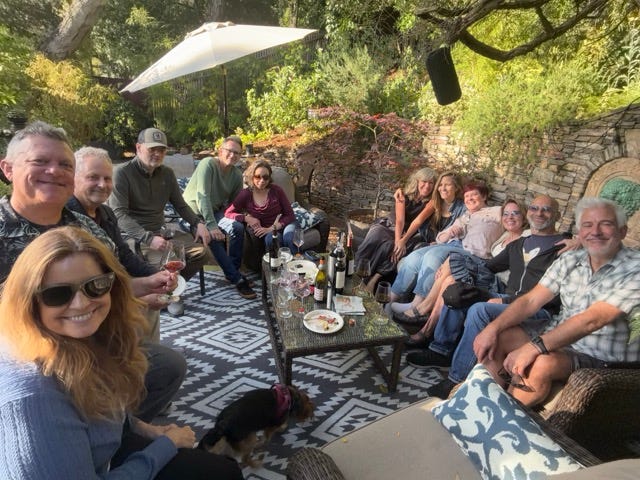
Meanwhile, while we’ll continue enjoying afternoons in Sonoma County, Napa County, Amador County, and “wine counties” beyond, we’ve also added something new to our own repertoire — at home in our garden: the Little Montali Wine Collective. (Little Montali is the name of our house.)
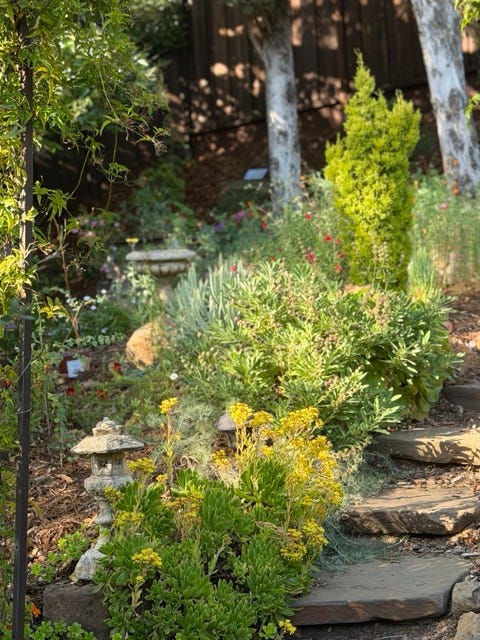
The “wine collective” part gets at the idea that together with the members of this little collective — our friends — we’ll explore different wines, regions, grapes, styles, and themes, all in the comfort of our home (which also gives me yet another excuse to host). David, my husband, focuses on the wines, and I focus on what I think is the most fun part (for me): creating the food and wine pairings.
This weekend was our inaugural gathering, and we chose the wines of Northern Italy as our theme — especially fitting since we’re leaving soon to host two trips in Italy once again: one in Tuscany and one in Northern Italy.
So alongside the wines, I created entirely plant-based pairings (of course) designed around the qualities each wine was asking for. We chose six wines altogether, but rather than creating six separate pairings, I created four food pairings, some of which complemented more than one wine beautifully.
Of course, Northern Italian wines span an enormous geographic area with countless styles and grape varieties. We could easily have focused on Alto Adige, Friuli-Venezia Giulia, or Emilia-Romagna alone. But for this inaugural gathering, we decided to focus on just two regions: the Veneto and Piemonte.
The wines we chose were a Prosecco, Pinot Grigio, Bardolino, Barbaresco, Barolo, and Amarone della Valpolicella. You can watch the video below for a glimpse of the afternoon, but here are some specifics.
Prosecco
We began the afternoon with Prosecco, the most famous wine from the Veneto region, pouring glasses as guests arrived. To pair with it, I put out Castelvetrano olives, an herby black olives, Marcona almonds, and potato chips (patatine). Salty, briny, crunchy, rich — exactly the kinds of qualities that sparkling wines love (way more than they love animal products)!
Pinot Grigio & Bardolino
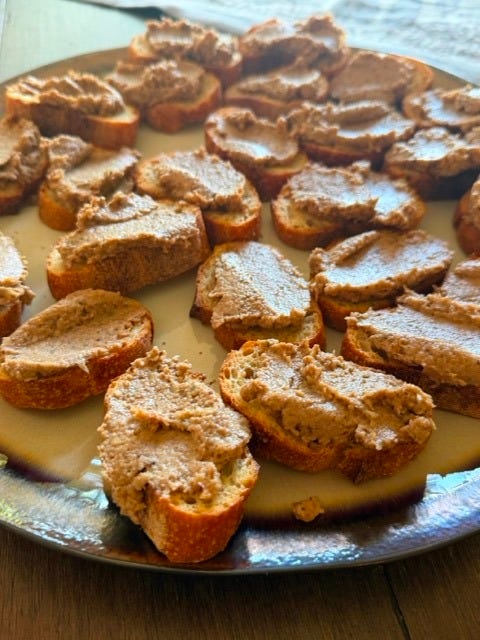
For these two wines, I chose the same pairing: my mushroom walnut pâté on crostini. Though one wine was white and the other red, both paired beautifully with the earthiness of the mushrooms, the fatty richness of the walnuts, and the herbal notes in the pâté (mostly thyme and sage). The pâté had enough depth and umami to stand up to the Bardolino while still being light and fresh enough for the Pinot Grigio.
Barbaresco & Barolo
Then we moved to Piemonte with Barbaresco and Barolo, both made from the Nebbiolo grape and known for their structure, tannins, and complexity.
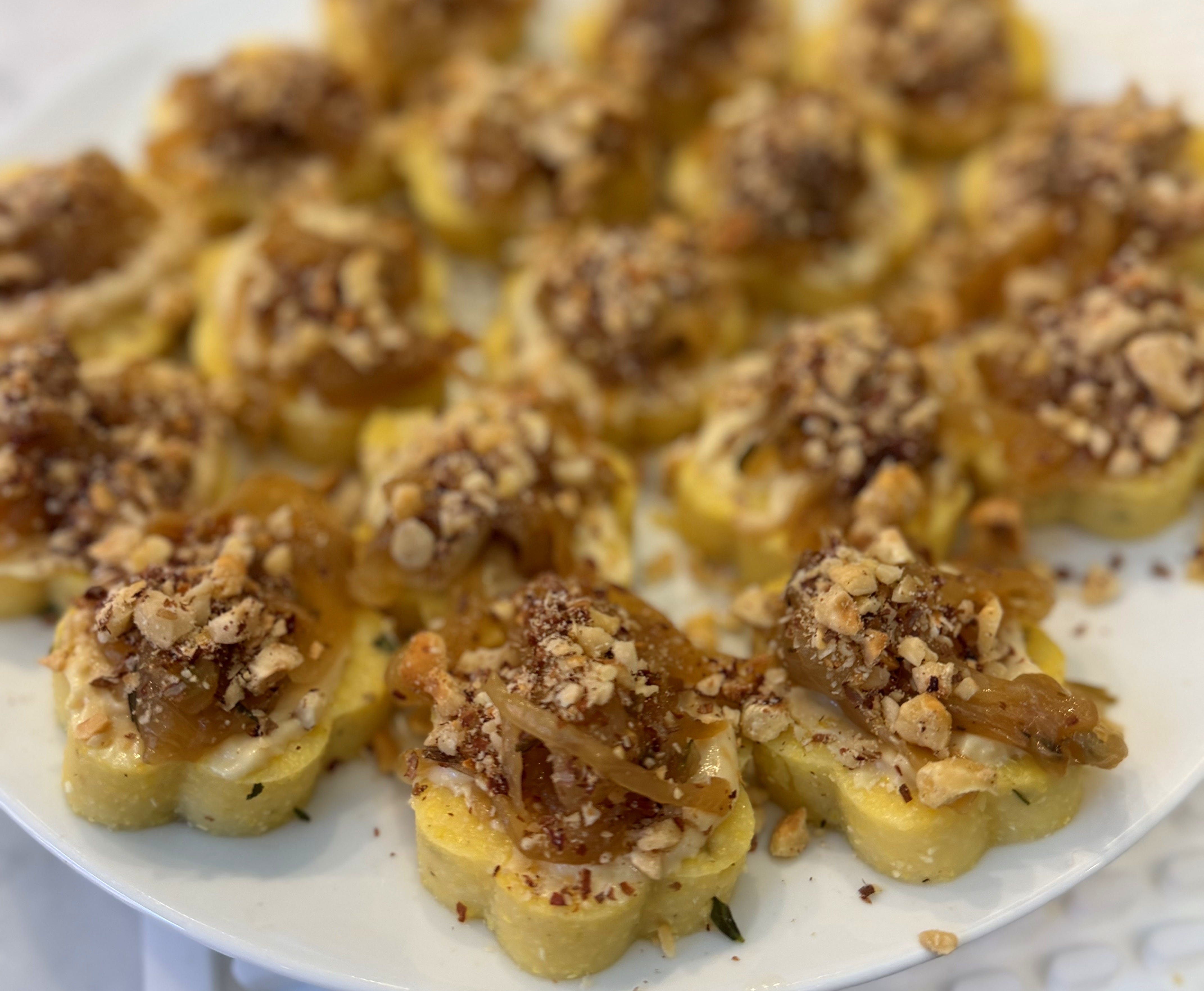
For these wines, I made herbed polenta topped with cashew cream, caramelized onions, and toasted hazelnuts. (Polenta and hazelnuts are both deeply tied to Northern Italy.) But I also chose this dish because it brought exactly the kinds of qualities these wines love: richness, earthiness, warmth, nuttiness, sweetness from the onions, creamy texture from the cashew cream, and enough depth and savoriness to stand up to the tannins in the wine.
Amarone della Valpolicella
Finally, we ended with a very special wine made from partially dried grapes, which gives it incredible concentration, richness, depth, and intensity.
For this one, we kept it simple and served really beautiful dark chocolate—partly because Amarone and chocolate are wonderful together but also because we had an entire feast waiting for us once the tasting itself was over!
As you can see in the video, we ended with a feast (not sure how we had any room in our tummies left!), and it was a fabulous day over all. We look forward to the next one, as we’re brimming with ideas for future Little Montali Wine Collective gatherings. I look forward to sharing more with you! AND…
I would love to hear your thoughts, questions, or suggestions…
Additional Resources
👉 Connect with me 1:1 – Get personalized guidance whatever you are looking for. (One one-on-one connection is also a perk of the Founding Member/VIP level here on Substack.)
👉 Read A Year of Compassion – Daily inspiration to help you live with intention, kindness, and clarity.
👉 Check out my Recipe E-Books and my library of On-Demand Cooking Classes for recipes.
👉 Travel the World Vegan Style! I’ve partnered with World Vegan Travel to bring you the best in luxury, all-inclusive vegan trips around the globe. Whether I am personally hosting or not, every itinerary is curated for a high-quality, premium experience. Check out upcoming trips, and please remember when booking any trip to mention you heard about them from COLLEEN PATRICK-GOUDREAU. 😊
Before You Go…
Even with a nutrient-rich plant-based diet, we can thrive even more with thoughtful support. That’s where Complement comes in, I take Complement Essential as my daily multivitamin for B12, D3, iodine, zinc, and magnesium; Omega Complex for essential fats; and as part of my strength-training and muscle-building routine, I fuel up with their clean Organic Protein. With Complement and my nutrient-rich diet, I have everything I need to fuel my body, support my strength, and thrive so I can do my work in the world for animals — both human and non-human.
Complement your diet and and get 15% off everything you order—every time you order—using THIS LINK and the code: JOYFULVEGAN.

What a fabulous article! I'm blown away with the information and want to do wine pairings with more plant based foods. Thank you!!!