


If you hit the heart ❤️ at the top or bottom of this post, it helps others discover this publication! Thank you in advance! 🙏
This article is part of my ongoing series called Rewilding Your Yard for Wildlife and Biodiversity.

Native Garden Update!
As I’ve been writing about in the above-mentioned series, a couple of years ago I had a revelation about the gardens I steward here at home: in some ways I was helping wildlife but unintentionally hindering it in others.
I’ve always cared about supporting wildlife. We keep water out year-round. We have fountains scattered around the property where birds drink and bathe. We have tall trees that provide shelter, nesting sites, and food. We plant plants that attract pollinators.
In other words, we were already doing quite a bit.
But I realized I was missing an opportunity.
While I was planting some native plants, I was also choosing ornamentals—plants selected for how they look or how they serve us (providing screening, familiarity, or structure) rather than plants that support the wildlife that co-evolved with them: the plants native to my region.
And that epiphany changed how I began thinking about our garden. (Thank you, Doug Tallamy!)
And so, over the last couple years, I’ve been gradually shifting more and more of the garden toward native species. I’ve learned a tremendous amount along the way—so much that I’m now finishing my certification through the Pollinator Partnership as a Pollinator Steward.
But you certainly don’t need a certification to begin, and I wanted to share this update with you along with lessons I’ve learned along the way. Remember, you can always revisit the articles in the Rewilding series for much more inspiration, including:
Backyard Wildlife Safari: Simple Ways to Support (and Admire) the Animals Among Us
To Weed or Not to Weed: What to Pull (or Keep) When Creating a Backyard Wildlife Habitat
Planting Native Flowers (Not Keeping Beehives) Saves Pollinators
I’ve also created this video to show you some of the updates, especially now that we’re entering spring, and much of last year’s hard work is paying off! (Also, please (pretty please) subscribe to my YouTube channel once you click on the video! 🙏)
Lesson 1: Identify what’s already growing
One of the first things I did was start identifying the plants that were already on our property—even the ones I hadn’t planted. In the past, if something appeared in the garden that I didn’t recognize, I might have assumed it was a weed and pulled it.
But once I started identifying these mystery plants, I discovered that some of them were actually native species that had simply been waiting for the chance to grow. And by removing invasive plants that were crowding them out, I created space for those native plants to thrive.
And thrive they did!
Plants that I had never intentionally planted suddenly began appearing all over the hillside(s)—including California hedgenettle, which supports pollinators in ways I never realized before.
Lesson 2: Keystone species matter
Another concept that has completely changed how I think about planting is the idea of keystone species, which are the plants that support the greatest number of other living things—from caterpillars and insects to birds and mammals.
And one of the most powerful keystone plants in North America (and beyond)? Oak trees.
Wherever you are, identify the oaks native to your region. If you already have them, protect them. And if you’re looking to plant a tree—whether as a new addition or to replace one you need to take down—plant an oak.
Lesson 3: Wildflowers are easier than you think
One of the most joyful parts of this journey has been sowing native wildflower seeds.
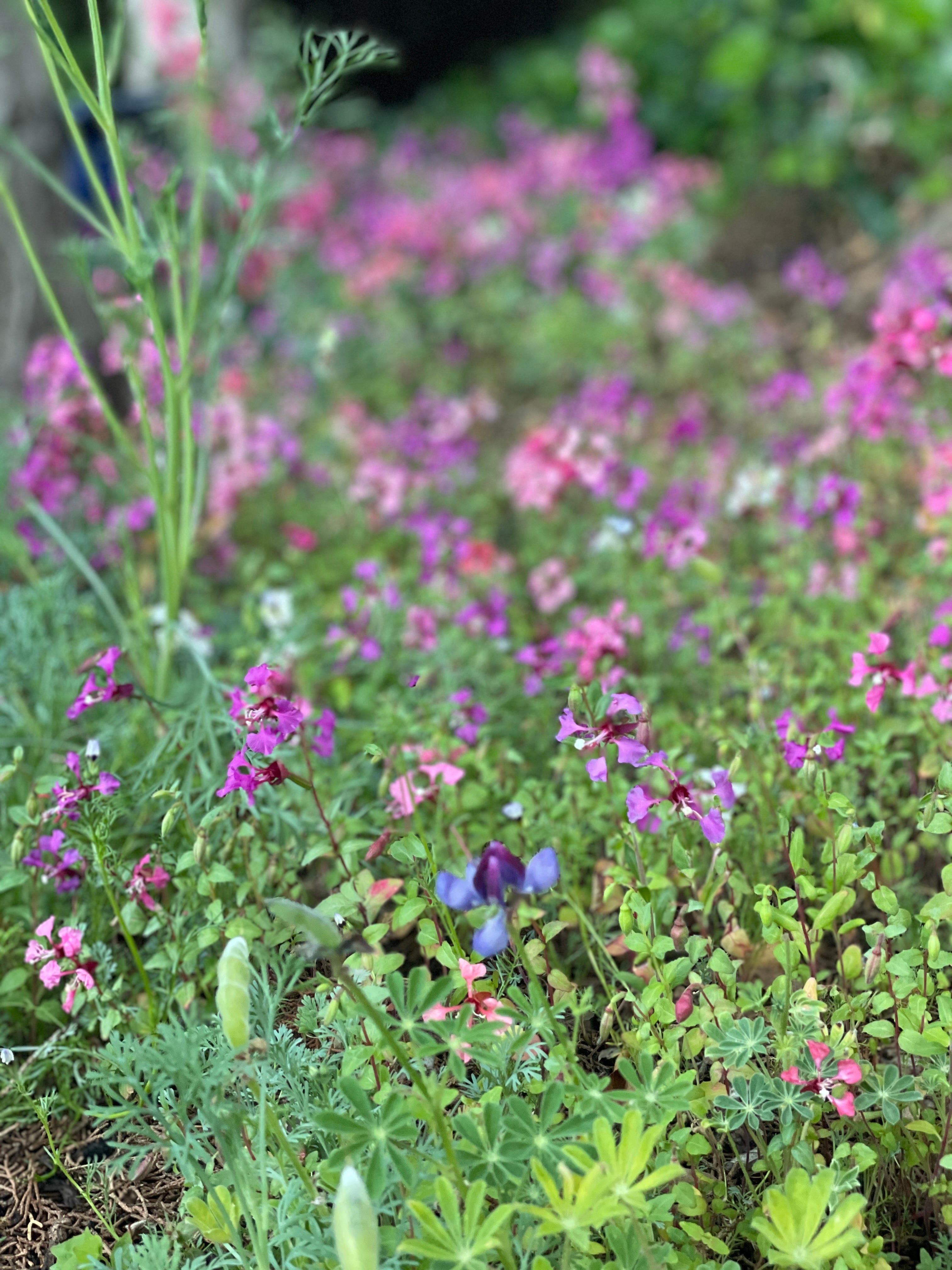
Last year I scattered seeds in a few areas of the garden, and by spring those spaces had come alive with blooms—and with bees, butterflies, and birds. This year I’ve already sown seeds again for next spring, and within just a week tiny seedlings are already emerging.
In this article, I provide resources for finding seeds native to your area.
Start Where You Are
Many people feel helpless when it comes to making the world a better place. The problems we face can feel so large that it’s easy to believe that whatever we do as individuals won’t really matter.
But as I always say, it’s not that we can make a difference; it’s that we do make a difference. Everything we do has an impact on someone or something else. All we get to decide is if we want that negative to be negative or positive. And the most exciting part is that we don’t have to travel far to have a positive impact. The opportunity is quite literally right outside our door.
Doug Tallamy, author of Nature’s Best Hope, introduced the concept of Homegrown National Park: the idea that if millions of people convert even small portions of their yards, gardens, balconies, schoolyards, and community spaces into wildlife-supporting habitat, those spaces together can function as one vast national park.
In other words, conservation doesn’t only happen in distant wilderness areas. It happens right where we live.
And one of the most rewarding parts of this process is that you get to see the results almost immediately: birds bathing, bees visiting flowers, butterflies migrating through your garden.
How much more impactful can it be than tending your own little piece of this world?
For the animals, thank you. LET ME KNOW IF YOU HAVE ANY QUESTIONS IN THE COMMENTS BELOW!
Did you know that if you hit the heart ❤️ at the top or bottom of this post, it helps others discover this publication? Thank you in advance! 🙏
Additional Resources
👉 Connect with me 1:1 – Get personalized guidance whatever you are looking for. (One one-on-one connection is also a perk of the Founding Member/VIP level here on Substack.)
👉 Read A Year of Compassion – Daily inspiration to help you live with intention, kindness, and clarity.
👉 Check out my Recipe E-Books and my library of On-Demand Cooking Classes for recipes.
👉 Travel the World Vegan Style! I’ve partnered with World Vegan Travel to bring you the best in luxury, all-inclusive vegan trips around the globe. Whether I am personally hosting or not, every itinerary is curated for a high-quality, premium experience. Check out upcoming trips, and please remember when booking any trip to mention you heard about them from COLLEEN PATRICK-GOUDREAU. 😊
Supporting a Joyful Life
Even with a nutrient-rich plant-based diet, we can thrive even more with thoughtful support. That’s where Complement comes in, I take Complement Essential as my daily multivitamin for B12, D3, iodine, zinc, and magnesium; Omega Complex for essential fats; and as part of my strength-training and muscle-building routine, I fuel up with their clean Organic Protein. With Complement and my nutrient-rich diet, I have everything I need to fuel my body, support my strength, and thrive so I can do my work in the world for animals — both human and non-human.