This article is reader-supported. To receive new posts and support my work, consider becoming a free or paid subscriber.
Thank you for clicking the heart ❤️ at the top or bottom of this post, which helps others discover this publication! 🙏
Photo by LikeMeat
If you’ve been listening to Food for Thought podcast or reading my Substack over the last few years, you know I’ve been talking a lot about protein.
If you’re new to my work, you might be shaking your head thinking I’ve just hopped on the high-protein bandwagon.
First of all, you’d be wrong to assume that. I don’t jump on bandwagons—never have, never will.
Second, this is not about following trends; it’s about listening to the research (some of which has been updated), honoring where our bodies are right now, and aligning our nutrition with that reality.
In previous articles and episodes (just search for “protein” on my Substack), I touched on
how U.S. dietary guidelines shaped the way we think about protein—and why so many people still equate it with meat.
the shift from “meat” as a food group to “protein” as a nutrient category
how protein functions in the body
why plant and animal amino acids are identical
why the RDA is really just a baseline minimum
and the fact that I’ve doubled—if not more than doubled—my protein intake compared to where I was just a few years ago
You can listen to the episode here and watch the video here (and below) for the fuller explanation of things, but what I want to do today is to share exactly which plant foods pack the most protein per calorie if you’re interested in increasing your protein in a healthy, compassionate way.
Having a written version of this has been enthusiastically requested by many of you, particularly my supporters, so enjoy!
As I discuss in detail in many recent protein- and menopause-related episodes and articles, I’m taking an intentional, science-backed approach tailored specifically to my age, life stage, and fitness goals. When calculating daily intake, many experts recommend aiming for roughly 1 gram of protein per pound of target body weight—or a clean, comfortable baseline target of around 100 grams daily. Ish.
If you’ve been relying on standard government dietary guidelines, that number might sound quite high to you, and I encourage you to check out the related episodes and articles linked below for a broader, deeper understanding of why I’m taking this approach—and why aiming above the bare minimum can be transformative.
But before we get to the list, I’m very excited to announce a FREE webinar I’m hosting with Complement!
🎥 JOIN ME LIVE: UPCOMING WEBINAR WITH COMPLEMENT!
Want to go even deeper into healthy aging? I’m hosting a live webinar with Complement where I’ll be focusing on the main pillars of healthy aging and the menopause transition: nutrition, strength training, perspective and attitude, and more. I’ll be offering practical strategies, answer your burning questions, and talk all about optimizing our wellness and joy! TUESDAY, SEPTEMBER 22nd AT 4:00 P.M. PT / 7:00 P.M. ET
So, after much research, I compiled and ranked the absolute best sources of plant-based protein—and I think some of this is going to surprise you! Before we jump straight into the countdown, here are two quick qualifiers for how I evaluated and ranked these foods:
The Protein-to-Calorie Ratio: Instead of simply listing grams per cup, I’m ranking foods by how much protein they deliver per 100 calories. This is particularly useful for body recomposition (losing fat while building or maintaining muscle), showing you which foods give you the biggest protein “bang” for your caloric budget.
Real-World Practicality: I am only highlighting foods that are realistic to eat in 100-calorie portions. (For instance, spirulina technically delivers 20g of protein per 100 calories, but you’d have to eat 5 full tablespoons! Leafy greens are also fantastic, but you’d need 8–10 cooked cups to hit 100 calories. Eat your greens for micronutrients, not as your primary protein anchor.
Now, let’s dive into our top plant-protein stars—ranked by their real-world protein density per 100 calories!
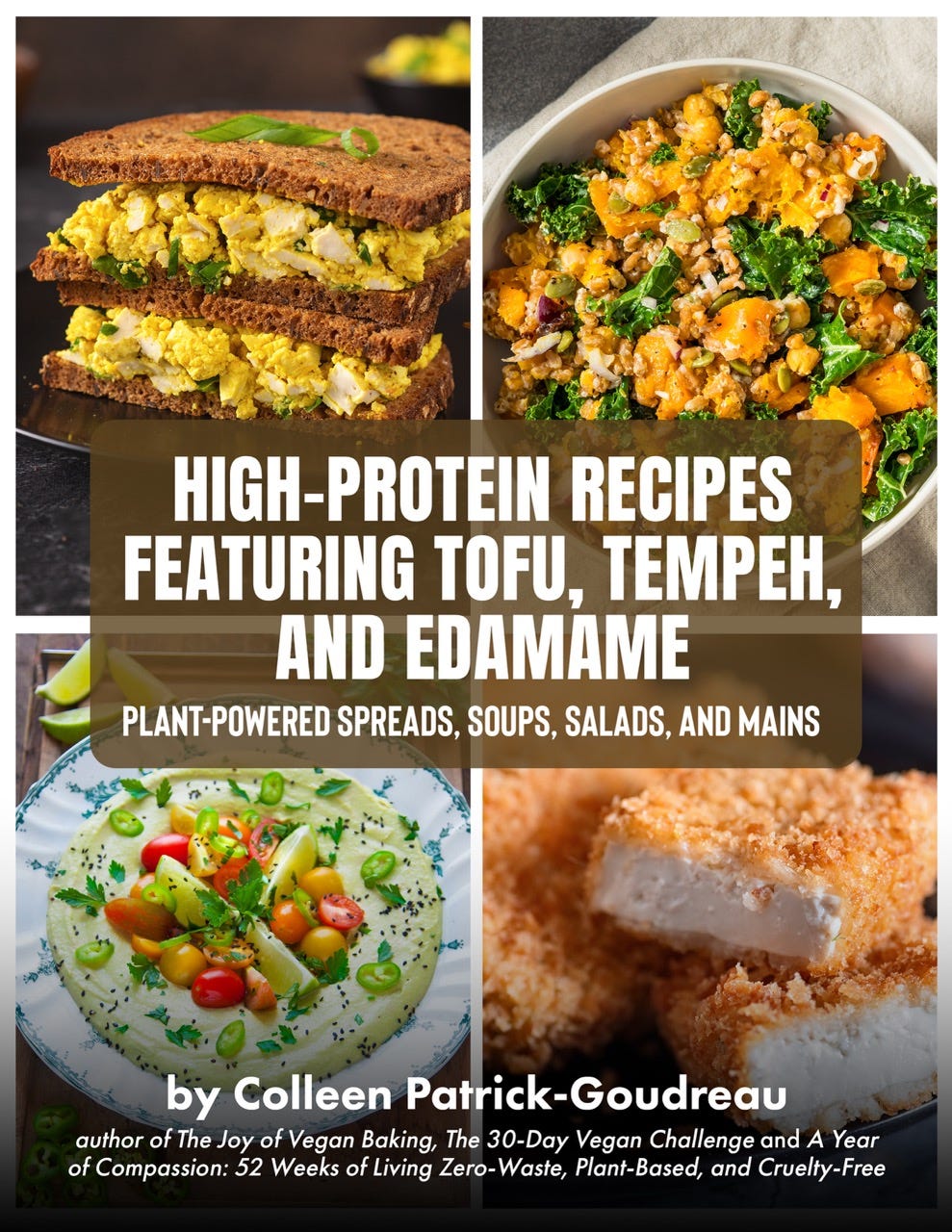
As we dive into these individual ingredients, remember that you don't have to figure out how to turn them into delicious meals on your own—I’ve already created an e-book, High-Protein Recipes Featuring Tofu, Tempeh, and Edamame, to give you 12 simple, savory staples (from Creamy Edamame Soup to Southwestern Tofu Burgers) packing anywhere from 10 to 20+ grams of protein per serving!
🌟 Superstars: 15–20 g Protein per 100 Calories
Let’s start at the top with our SUPERSTARS—the plant foods that deliver a massive 15 to 20+ grams of protein per 100 calories.
Seitan (Wheat Gluten) (~18–20+ g protein per 100 calories): Made from vital wheat gluten, seitan is practically pure protein. It’s dense, chewy, insanely versatile, and has been a plant-based staple for over 1,500 years.
Fava Bean Tofu (~15–18 g protein per 100 calories): A fantastic soy-free alternative to traditional tofu made entirely from fava beans. It’s naturally higher in protein per calorie, beautifully firm, and cooks up just like classic tofu.
Clean Plant-Based Protein Powders (~15–20 g protein per 100 calories): Pure, minimal-ingredient protein powders (like pea, rice, or hemp blends) give you a concentrated, effortless protein boost in a single scoop. (Complement is my absolute go-to here for clean ingredients and third-party testing!)
⭐ Standouts: 10–14 g Protein per 100 Calories
These traditional staples and versatile modern alternatives form the reliable backbone of a high-protein plant-based kitchen.
Edamame (~11–12 g protein per 100 calories): Whole, young soybeans that are delicious, packed with fiber, folate, and vitamin K, and serve as a complete protein right out of the pod.
Tempeh (~11–12 g protein per 100 calories): Fermented whole soybeans pressed into a firm block—giving you maximum protein, gut-friendly probiotics, and a rich, nutty flavor.
Powdered Peanut Butter (11–12 g protein per 100 calories | ~3 Tbsp powder): Pressing out the oils concentrated in regular peanut butter turns a fat-dense food into a protein standout for smoothies and oats.
Super-Firm Tofu (~12–14 g protein per 100 calories): Because it’s pressed with less water, super-firm tofu delivers even more protein density per bite, making it fantastic for crisping up in a skillet or air fryer.
Lupini Beans (~13–15 g protein per 100 calories): An ancient Mediterranean legume that is super low in calories, packed with fiber, and delivers a massive protein hit with almost no prep required.
Beyond Burger (~8.7 g per 100 calories / 20 g per patty): Strictly by the 100-calorie math, it sits right at the top of our 5–9g tier. But just like yogurt, nobody eats a third of a burger! When you eat the full patty (~230 calories), it delivers a solid 20 grams of protein without the cholesterol or saturated animal fat of beef—making it a real-world standout.
High-Protein Plant Yogurts Avoid low-protein varieties, and choose higher protein yogurt brands, such as
Kite Hill Greek-Style Almond & Soy Milk (15 g protein per 120 calories),
Icelandic Provisions Oatmilk (8 g protein per 100 calories)
Siggi’s Plant-Based (5.5 g protein per 100 calories)
A quick note on yogurts: While a couple of these sit just under 10 grams per 100 calories, nobody eats two-thirds of a cup/container! When you eat the full single-serve container (~150 calories), you’re getting an easy 10 to 15 grams of protein in one sitting—which is why I include them here.
💪 Solid Performers: 5–9 g Protein per 100 Calories
Next, let’s move onto our last category of high-protein plant foods, which is the category of SOLID PERFORMERS – those with 5–9 grams of protein per 100 calories.
Green Peas (~7 g protein per 100 calories): Peas are often overlooked, but they’re packed with protein, fiber, vitamins A, C, and K, and iron.
Lentils (~8–9 g protein per 100 calories): Fiber-rich, versatile, iron-dense, affordable, and quick-cooking.
Beans (black, kidney, pinto, chickpeas) (~6–8 g protein per 100 calories): Excellent staples packed with protein, complex carbs, and slow-burning energy.
Tofu (Firm / Extra Firm) (~8–10 g protein per 100 calories): While super-firm and fava bean tofu hit higher numbers, classic firm tofu is a steady, reliable anchor packed with protein, calcium, and iron.
Soy Milk (~7–8 g protein per 100 calories): The original plant milk and the only one that naturally matches cow’s milk in protein, with none of the cholesterol or lactose.
Nutritional Yeast (~8–9 g protein per 100 calories): Savory, cheesy, B-vitamin-packed goodness you can shake on everything.
Hemp Seeds (~5–6 g protein per 100 calories): Tiny powerhouses loaded with healthy omega-3 fats, iron, and magnesium.
Pumpkin Seeds (Pepitas) (~5 g protein per 100 calories): Crunchy, delicious, and rich in zinc, magnesium, and iron.
🌱 Sustainers: 3–5 g Protein per 100 Calories
Nutrient-rich, delicious everyday foods that contribute meaningfully to your overall daily total, even if they aren’t primary protein sources per calorie.
Quinoa (3–4 g protein per 100 calories | ~½ cup cooked): Excellent amino acid balance (especially lysine) compared to standard grains, making larger meal-sized portions a solid contributor.
Traditional Peanut Butter (3.7 g protein per 100 calories | ~1 Tbsp): Rich in healthy fats and flavor; best enjoyed for taste and satiety rather than concentrated protein.
Nuts & Seeds (Almonds, Cashews, Walnuts, Chia, Flax, Sunflower) (2–4 g protein per 100 calories | small handful / 1–2 Tbsp): Exceptional sources of micronutrients, fiber, and healthy fats that add incremental protein when used as toppings.
Whole Grains & Vegetables (Oats, Barley, Broccoli, Potatoes): Everyday whole foods whose protein accumulates naturally throughout the day alongside crucial antioxidants and fiber.
🏃 Convenience Options for Travel & Busy Days
Before we wrap up, I want to mention a few high-protein convenience foods.
Commercial protein shakes – Aside from making your own protein-rich smoothies and shakes at home (which of course you can transport with you if you’re on the run; my favorite is Complement chocolate of course), there are some commercial plant-based protein smoothies that can be a lifesaver when you’re on the go — traveling, rushing to the airport, or just needing something quick after a workout. There are many plant-based options now, and most deliver 15–20 g of protein per serving. A few popular choices include:
Ripple (pea protein) – ~20 g per bottle, creamy and mild.
Orgain – ~20 g, widely available, a little sweeter.
Evolve – ~20 g, another pea protein option with a clean ingredient list.
They’re not meant to replace whole food meals, but they can fill the gap when necessary.
Same with … protein bars
Protein bars – These are also not meal replacements or the foundation of a healthy diet, but they can be incredibly handy when you need something quick. Think of them as convenience, not your primary protein source. And if you already eat granola bars (and frankly, a lot of people do), I’d recommend switching them out for protein bars instead — they’ll give you more staying power and help meet your protein needs. A few of the better plant-based options:
No Cow Bar – The densest of the bunch: ~10–11 g protein per 100 calories, low sugar, high fiber.
Good! Snacks – ~7 g per 100 calories, vegan, and candy-bar-like in taste.
Aloha Organic – ~6.5 g per 100 calories, organic and made with pumpkin seed and brown rice protein.
GoMacro – ~5–6 g per 100 calories, softer and cookie-like, great for those with allergies.
That’s it for now! Let me know what you think, and don’t forget to register for my FREE upcoming webinar, Healthy Aging and the Menopause Transition! Click the button for DETAILS AND REGISTRATION!
Speaking of Complement, even with a nutrient-rich plant-based diet, we can thrive even more with thoughtful support. That’s where Complement comes in, I take Complement Essential as my daily multivitamin for B12, D3, iodine, zinc, and magnesium; Omega Complex for essential fats; and as part of my strength-training and muscle-building routine, I fuel up with their clean Organic Protein. With Complement and my nutrient-rich diet, I have everything I need to fuel my body, support my strength, and thrive so I can do my work in the world for animals — both human and non-human.
Complement your diet and and get 15% off everything you order—every time you order—using THIS LINK and the code: JOYFULVEGAN.
👉 Travel the World Vegan Style! I’ve partnered with World Vegan Travel to bring you the best in luxury, all-inclusive vegan trips around the globe. Whether I am personally hosting or not, every itinerary is curated for a high-quality, premium experience. Check out upcoming trips, and please remember when booking any trip to mention you heard about them from COLLEEN PATRICK-GOUDREAU. 😊





Thanks for this. I'm excited about the upcoming webinar and collab with Compliment! It's about time they had you as a guest. 😻