

Sushi Doesn't Mean Fish
The traditional plant-based roots of Japanese cuisine from miso to soba

We’re back in Japan, hosting two more groups on our all-inclusive vegan trips. I’ve already shared a number of articles related to Japan—some free, some for paid subscribers (thank you!)—that you might want to explore:
As we discussed in When Japan (Mostly) Stopped Eating Meat, Japan has a long and fascinating history of plant-forward eating shaped by religion, geography, and culture—one that continues to influence its cuisine today.
Today, we’ll look at some of those specific dishes. But before we do, it’s worth stepping back to see the bigger picture of Japanese food culture—because context is everything.
Four Pillars of Japanese Cuisine
There are four key things to keep in mind as we go along:
Japan’s culinary scene is deeply regional, with distinct food traditions across different areas, much like Italy. This regional diversity shapes the way food is prepared, enjoyed, and celebrated.
Japan is also a true foodie culture, where food is not just nourishment but an art form and a social experience.
Japan possesses an incredible talent for taking culinary influences from other cultures and adapting them into something entirely its own—a concept often described as wafū. You see this in dishes like tempura (from the Portuguese), ramen (with Chinese roots), and curry (via the British), which have all been transformed into something unmistakably Japanese.
Japan is the birthplace of umami, the officially recognized “fifth taste.” Coined in 1908 by a Japanese chemist who identified a deeply savory richness in kombu (kelp) broth, umami translates roughly to “delicious taste.” While it naturally occurs in plant foods like seaweed and mushrooms, Japan has truly mastered the art of maximizing this mouthwatering flavor through its traditional use of dashi, miso, and fermented foods.
These four pillars—regional diversity, an artistic foodie culture, a talent for culinary adaptation, and the mastery of umami—will frame our discussion as I share the incredible food of this island nation.
A Roadmap for Our Culinary Journey
Because Japanese culinary culture is so rich and expansive, there is simply too much to fit into a single piece. So, for this first installment, we are going to focus on some of the most familiar foods, ingredients, and dishes you likely already know and love.
In subsequent articles, we’ll tackle other aspects of Japanese cuisine and culture, including:
Navigating Japan as a Vegan (or Vegetarian)
The Many Faces of the Ancient Soybean
The Regional Art of Okonomiyaki
Traditional Japanese Sweets
From Matcha to Malt: A Drinker's Guide
But for today, let’s start with perhaps the most iconic Japanese food of all: sushi.
Sushi
Technically, sushi refers to “vinegared rice” combined with various ingredients. Most people assume those ingredients always mean aquatic animals, but the defining element is the seasoned rice, not the fish. So plant-based sushi is authentically sushi—not an “alternative” to “regular” sushi.
While many sushi restaurants primarily do serve fish, plant-based options are increasingly common—especially in larger cities. You’ll often find cucumber or avocado rolls, inari (tofu pouch with rice), and vegetable nigiri, though availability varies, so it’s always worth checking ahead.
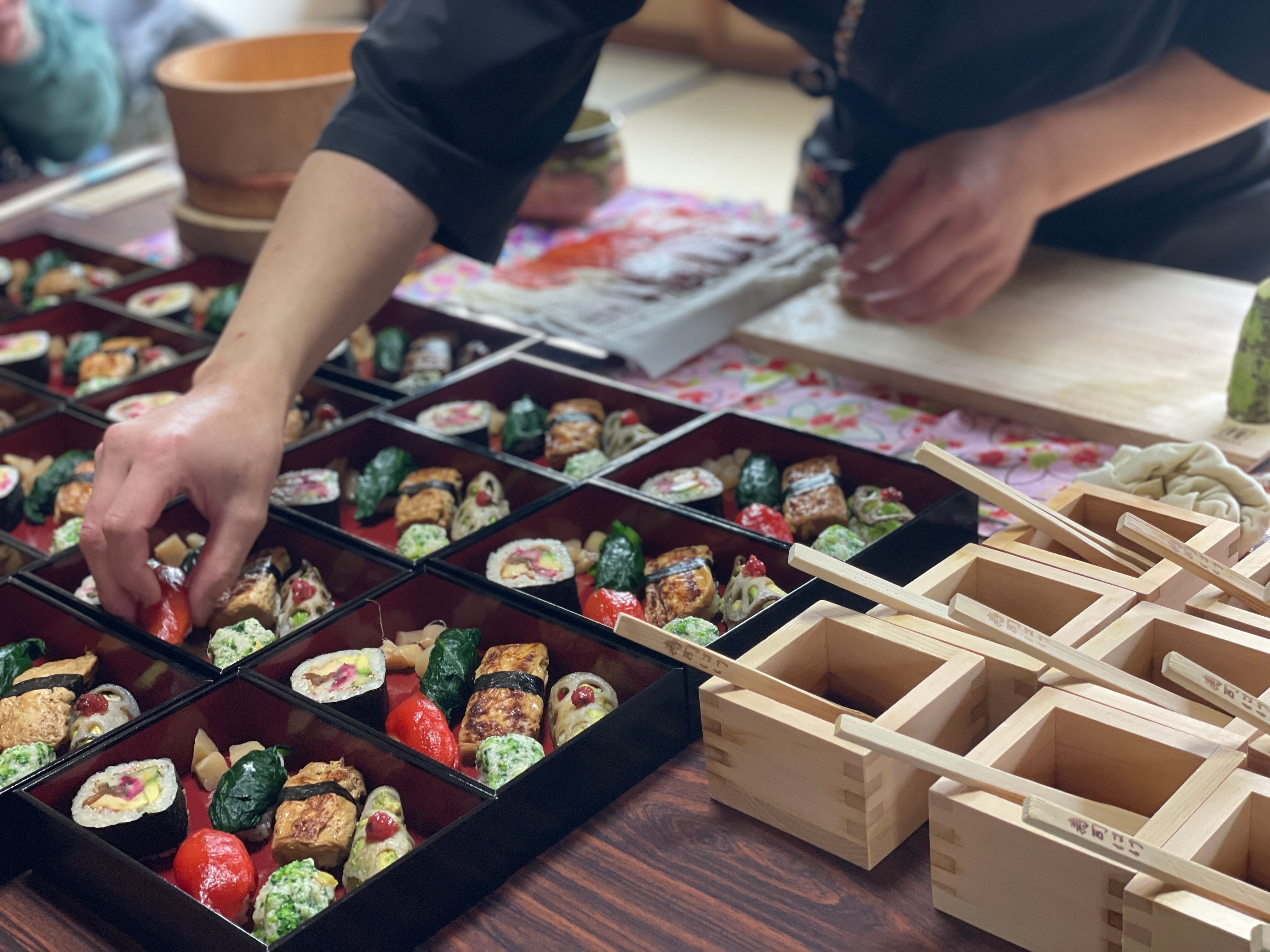
And once you start paying attention, you realize there isn’t just one kind of sushi—there are several distinct styles, each with its own form and tradition:
Nigiri
Meaning “to grasp” or “to squeeze,” nigiri is a style of sushi in which the rice is gently hand-pressed into an oval shape and topped with other ingredients, as demonstrated by our sushi master, Chef Ko, below.
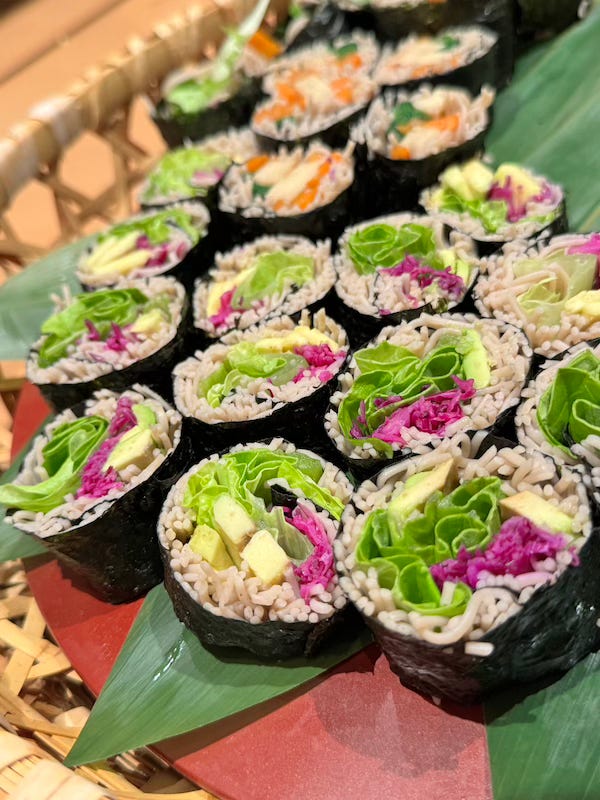
Maki
Meaning “to roll,” maki is a style of sushi in which rice (or even noodles or other grains) and fillings are rolled in nori (seaweed) or other wrappers.
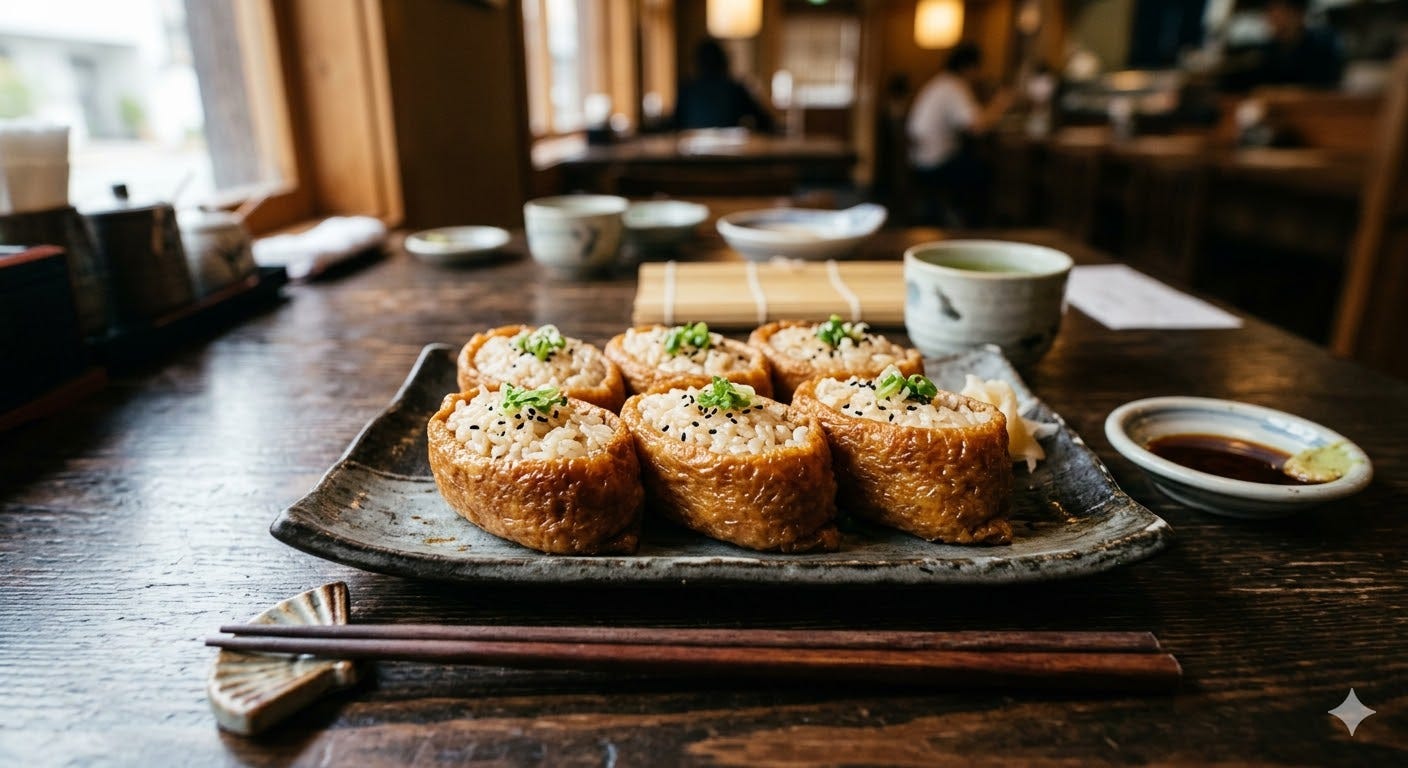
Inari
Sushi rice stuffed into sweet tofu pouches. Inari refers to the Shinto god of rice, fertility, and prosperity. Inari sushi consists of vinegared rice stuffed inside sweet tofu pouches, which were traditionally offered at shrines dedicated to Inari.
Sashimi
Yes, sashimi is thinly sliced raw fish or seafood, served without rice — making it not technically sushi since it lacks vinegared rice, and the word means “to stab” or “to pierce.”
刺 (sashi) means “pierce” or “stab.”
身 (mi) means “body” or “flesh.”
The name likely comes from an old practice where chefs would attach the fish’s tail or fin to the slices to identify the type of fish being served.
Edamame
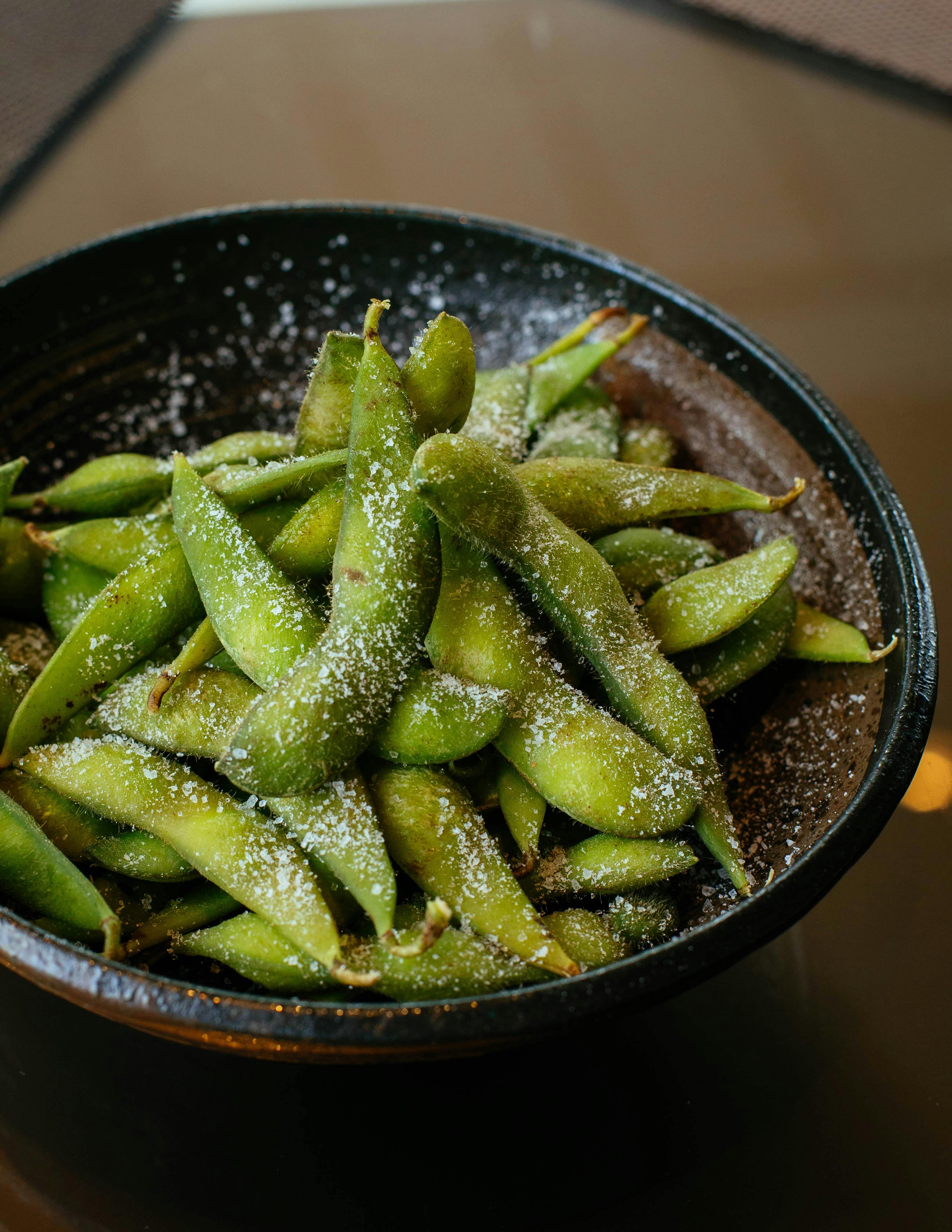
Edamame are young soybeans harvested at their peak. Typically boiled or steamed in the pod and lightly salted, they are a staple high-protein snack in Japanese cuisine. You’ll find them as a standard appetizer at every izakaya (pub) or alongside meals. Naturally plant-based and nutrient-dense, their mild flavor and satisfying texture make them the ultimate healthy side dish.
Tempura
Did you know the word tempura actually comes from the Latin tempora, meaning “times” or “seasons”? In the 16th century, Portuguese missionaries brought the technique of batter-frying vegetables to Japan during religious periods when meat was avoided. The Japanese refined it into the light, delicate tempura we know today—now a staple of Japanese cuisine. (Read the full story, Tempura: The Plant-Based Origins of Japan’s Favorite Fried Dish.)
Gyoza
Another staple you’re likely familiar with—and one that is wonderfully easy to find in plant-based form—is gyoza. In fact, the word gyoza literally translates to "dumpling."
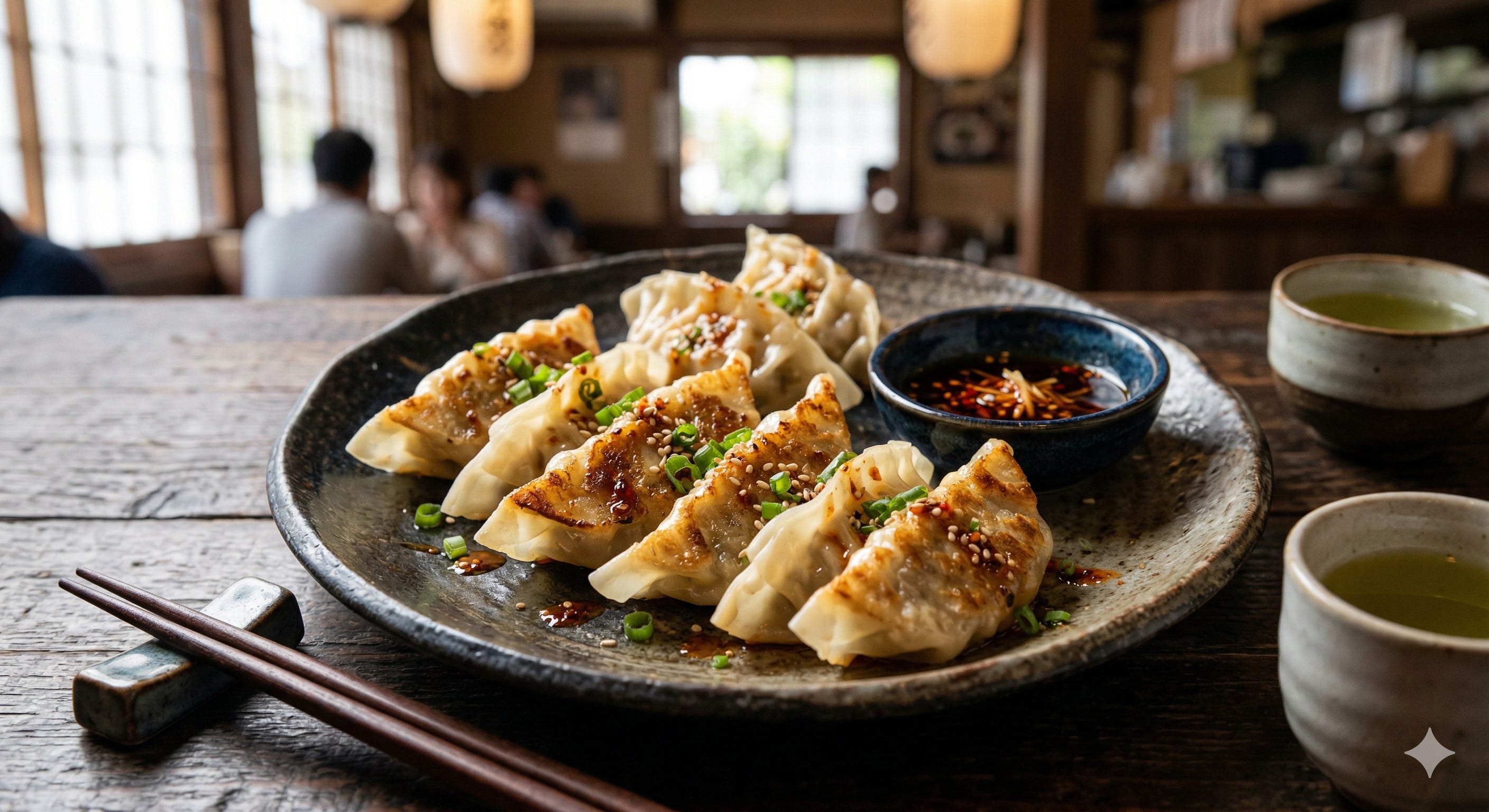
Originally from China, gyoza were introduced to Japan in the early 20th century and adapted into the now-iconic yaki-gyoza, with a thinner wrapper, stronger garlic flavor, and crispy bottom.
While traditional versions include pig flesh, plant-based gyoza are filled with ingredients like cabbage, mushrooms, tofu, garlic, ginger, and green onions—creating that same irresistible balance of crispy, tender, and savory, especially with a soy-vinegar-chili oil dipping sauce.
Noodles: Udon, Soba, and Ramen
Soba, udon, and ramen are three of Japan’s most iconic noodles, each with distinct histories, ingredients, and cultural significance. While the concept of noodles originally made its way to Japan from China, the Japanese adapted and perfected them into an art form all their own.
Soba
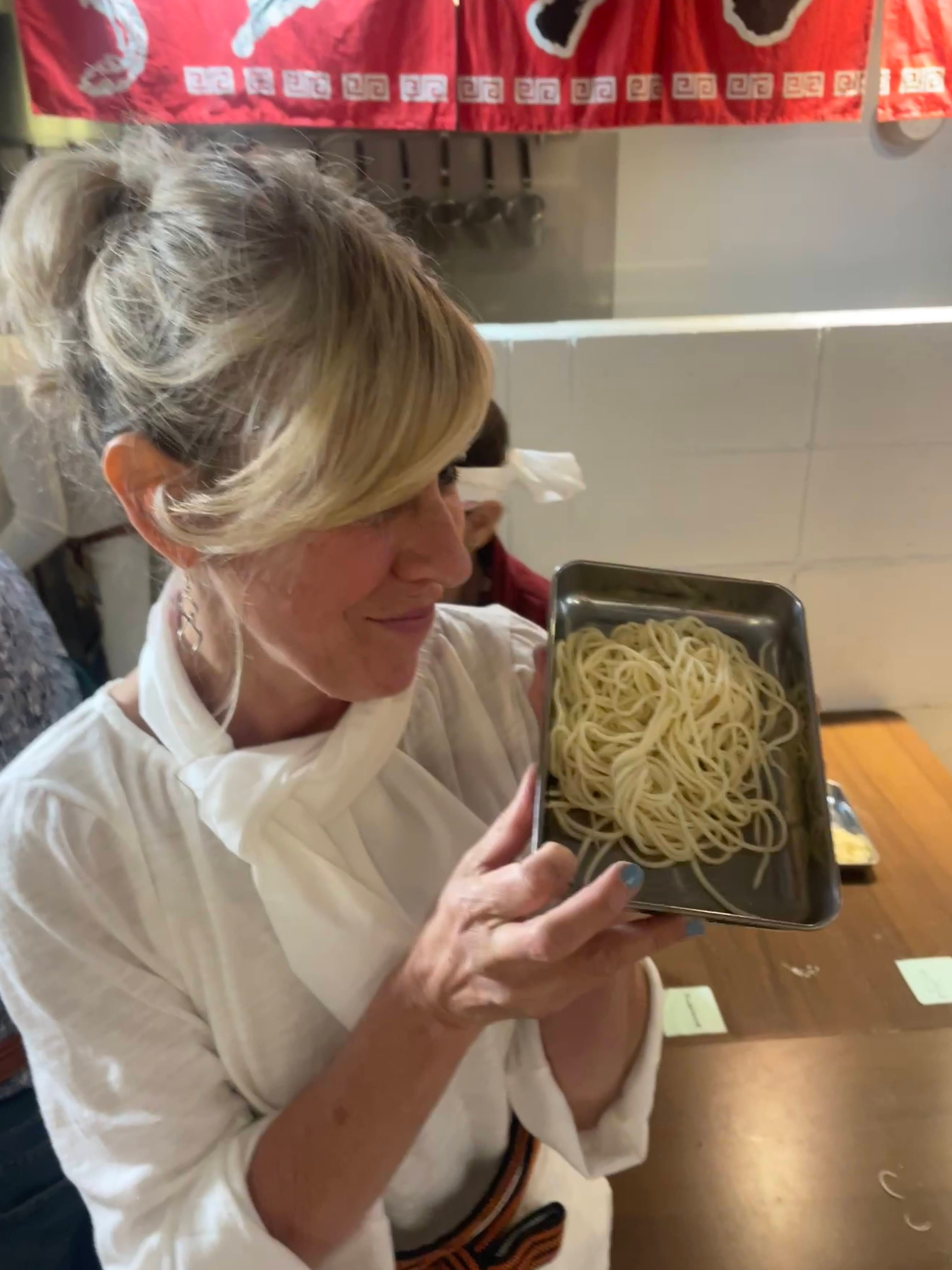
Soba—buckwheat noodles—have been a Japanese staple since at least the Edo period (1603–1868), though buckwheat was eaten even earlier as dumplings. They became especially popular in Tokyo for being quick, nutritious, and rich in thiamine—a lifesaver in an era of vitamin deficiencies.
Today, soba is still considered a “healthy” choice, high in protein, fiber, and antioxidants. It’s also deeply symbolic: on December 31st, people eat toshikoshi soba (“year-crossing noodles”) to let go of the past year and begin anew.
Udon
Udon, in contrast, has even older roots, dating back to the Tang Dynasty (618–907 CE) in China, when Buddhist monks brought wheat-based noodle-making techniques to Japan. By the Kamakura Period (1185–1333), udon had become a staple in Japanese cuisine, particularly in western Japan, where wheat was more readily available than buckwheat.
Soba masters undergo intense training, with some taking years to perfect the skill of hand-cutting soba to uniform thinness.
Ramen
As I already have an entire detailed article on this iconic noodle, I won’t say much here other than:
Slurping is absolutely acceptable, but it’s not required.
It’s considered rude to rest your chopsticks in the bowl of ramen while you’re eating it. Just rest them on the rim of the bowl if you’re taking a break between bites.
Bean sprouts are common in ramen, and I’m not a fan. If you’re also not a fan, it’s perfectly acceptable to ask for ramen without bean sprouts.
Sea vegetables
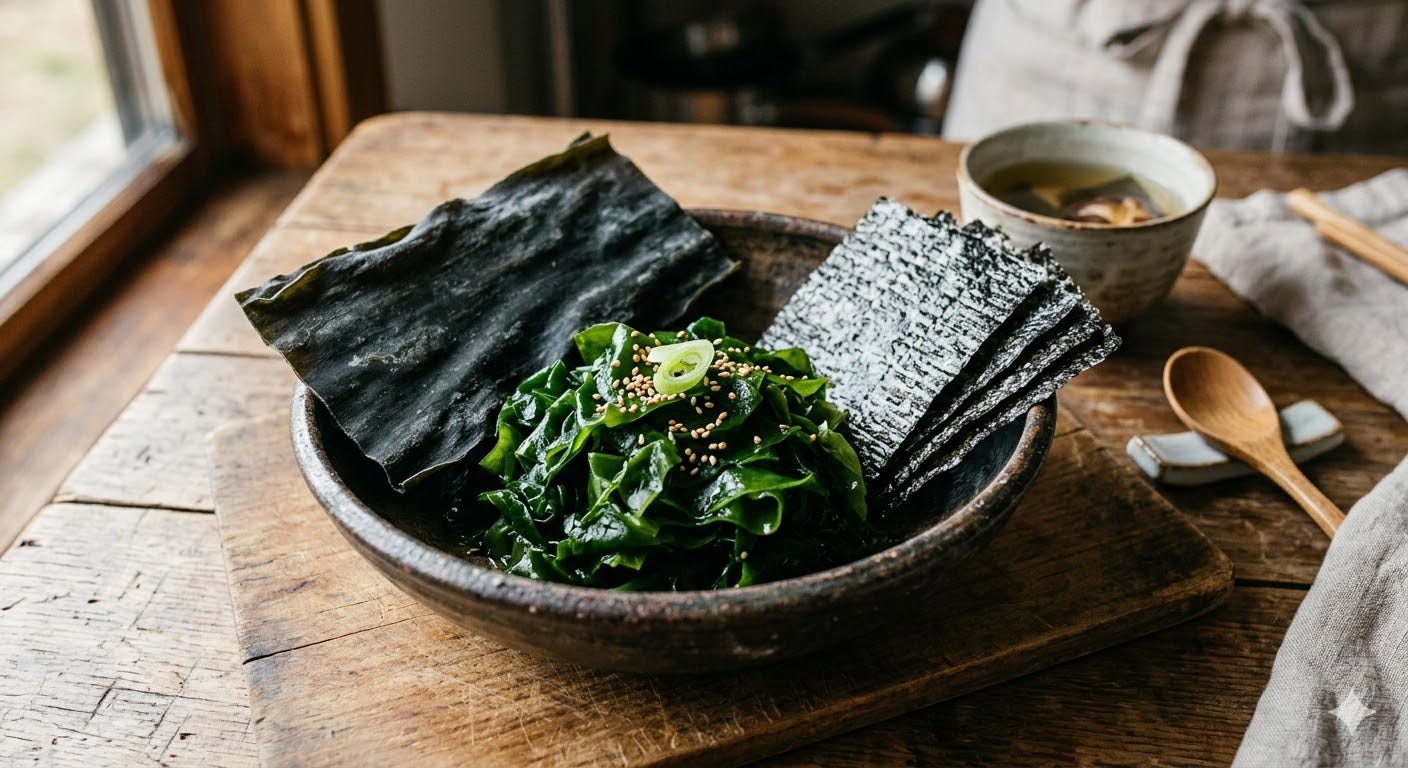
Beyond the ubiquitous nori, there are three other sea vegetable “heavy hitters” you’ll see everywhere: kombu, hijiki, and wakame.
Kombu: The backbone of dashi—a traditional Japanese broth. This thick kelp is packed with glutamic acid, the ultimate source of umami. It’s leathery and needs a long soak or cook to soften, but that deep, savory flavor is indispensable.
Hijiki: Dark, stringy, and firm with an earthy, nutty flavor. It’s a highly nutritious staple in home cooking and shojin ryori, traditionally simmered with carrots and tofu.
Wakame: Mild, slightly sweet, and slippery. It rehydrates fast, so it’s perfect for miso soup or a refreshing salad with vinegar and sesame.
A Quick Warning: Even though sea vegetables are plant-based, restaurants often sneak dashi (fish stock) into the dressings or sprinkle katsuobushi (fish flakes) on top. To keep it vegan, just ask for a simple dressing of soy sauce, rice vinegar, and sesame oil!
This feels like a really good place to wrap up this first installment, but we are truly just scratching the surface. In our upcoming articles, we’ll be exploring so much more, including:
Navigating Japan as a Vegan (or Vegetarian)
The Many Faces of the Ancient Soybean
The Regional Art of Okonomiyaki
Traditional Japanese Sweets
From Matcha to Malt: A Drinker’s Guide
Let me know in the comments which of these upcoming topics you are most excited to read about—or eat!