


Just a friendly reminder that if you hit the heart ❤️ at the top or bottom of this post, it helps others discover this publication! Thank you in advance! 🙏
We just hosted our second plant-based wine and food pairing, and it was a huge success. As I discussed in my last article on our inaugural tasting, my husband David and I started hosting these gatherings with our friends—calling our group the Little Montali Wine Collective (Little Montali being the name we affectionately gave our house).
After the tasting wrapped, we sat down to a catered lunch by From the Garden Catering, featuring a full Spain-inspired menu, all for us vegans, of course!
Catalan Cocas
Patatas Bravas
Tortilla Española
Grilled Tofu with Rosemary Sauce
Little Gem Salad with Vinaigrette
Subscribers get full access to the complete menu as well as recipes—including the Muhammara from the pairing portion. COMING SOON!
We wanted to explore something that is almost entirely unheard-of in both the wine world—and frankly, in the vegan world, too: creating sophisticated, truly intentional plant-based wine pairings.
And it’s somewhat understandable why this is so uncommon.
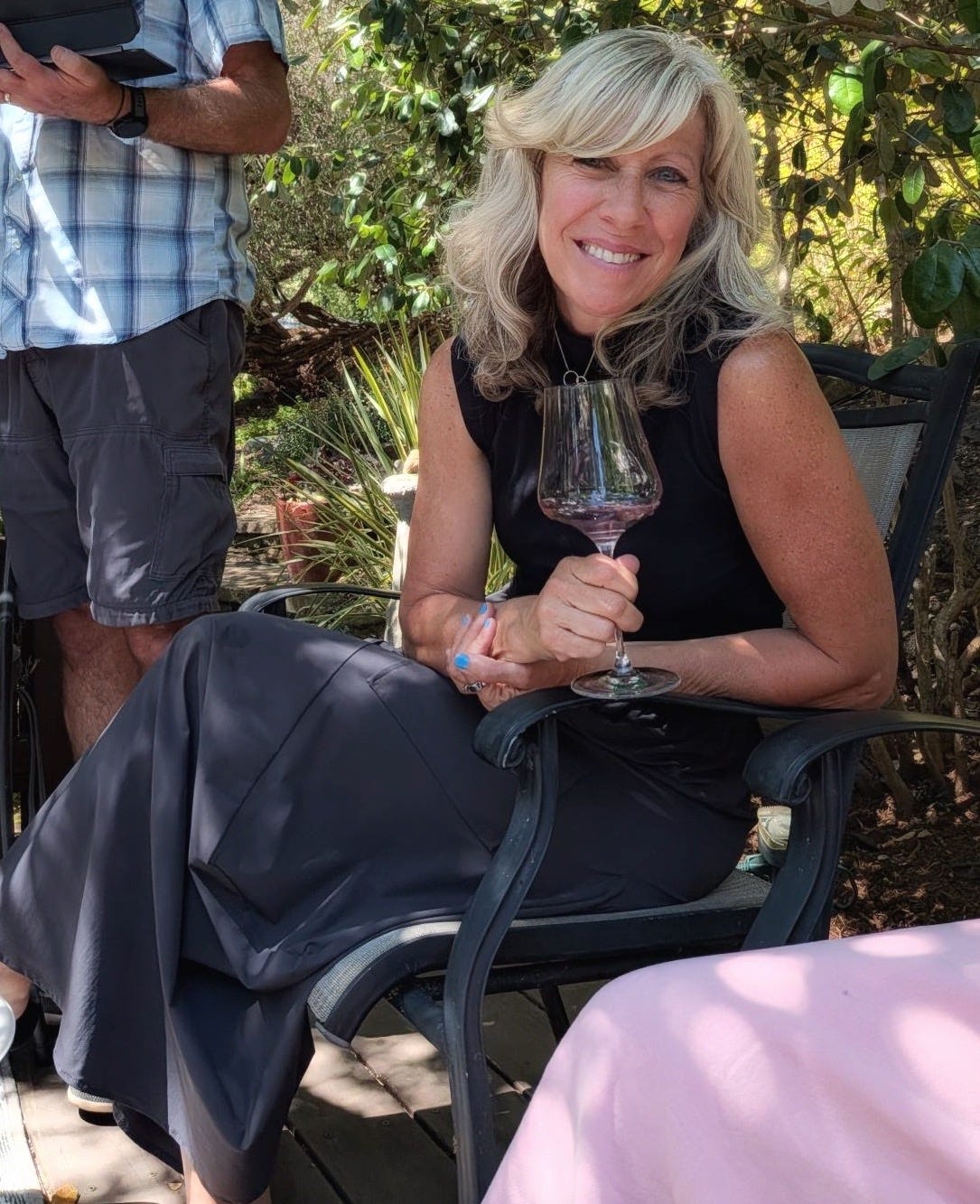
Traditional wine pairing advice was written for an (animal-based) meat-and-cheese world—Cabernet with steak, Sauvignon Blanc with oysters, or bold reds with charcuterie. Blah, blah, blah.
But as I shared last time, these recommendations miss the bigger picture: when you deconstruct it, it’s never actually about the animal products—it’s really about the qualities of fat, salt, smoke, acid, umami, texture, and so on.
David and I are testing these ideas in our home and sharing with you what we learn so you can create memorable, elevated plant-based pairings in your own home (or make confident recommendations to restaurants and wineries)!
Wines of Spain
Whereas our first Wine Collective featured the wines of Northern Italy (in anticipation of our visit to that region on our 5th vegan-hosted trip), our second tasting revolved entirely around the wines of Spain—a region we knew very little about prior to the tasting, which is part of the point.
Our Selection Process
David and I collaborate closely on the wine selections. Once he completes his deep dive into each wine's background and terroir, we narrow down the list together—aiming for five main bottles plus a welcome sparkling.
We buy all of our wine from K&L Wine Merchants, a distributor that carries a huge inventory of international wines.
Once we narrow the list down—we generally aim for five wines, not including our welcome sparkling—we sit down to break down their key characteristics.
That’s where my experience and research come in, and we start mapping out the food pairings that will either complement, cut through, or balance the wines we pour.
Starting with Sparkling
Even though we’ve only hosted two of these events, we’ve thrown enough dinners and parties to to know the value of starting things off with a little effervescence. A refreshing glass of bubbles (or burbujas, as they say in Spanish!) is the best way to welcome guests as they arrive.
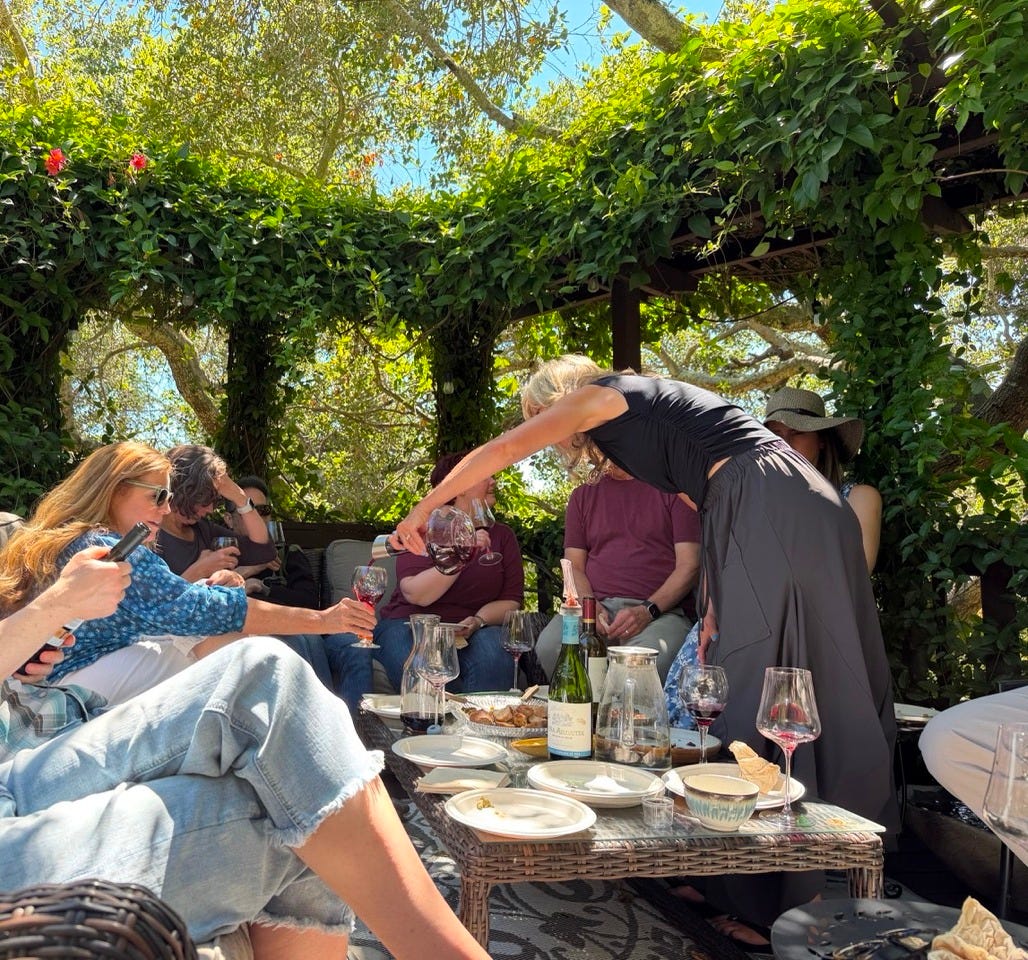
For our Northern Italy tasting, we kicked things off with Prosecco. For our tasting featuring Spanish wines, we started with Cava.
Cava is simply Spain’s answer to Champagne. It’s a dry, refreshing sparkling wine made using the exact same traditional method as French Champagne, but usually at a fraction of the price. I didn't include a food pairing for this one—we just used it as a way to introduce everyone to Spain’s bubbles and get guests settled in as they arrived.
Mission accomplished. It was a hit with everyone.
My Take
I’ve actually quite fallen in love with Cava. (Fun fact: “cava” actually means “cave” in Spanish, which is where they age the bottles.) Because it’s made the exact same way as Champagne, you get really fine bubbles and a nice crisp, citrusy flavor—just without the crazy price tag.
While there are countless ways to pair food and wine, I focused on three distinct strategies for this tasting—one for each of our wine blocks:
cutting through rich flavors
complementing similar profiles
and balancing contrasting elements.
For the whites, the goal was to cut through.
Cutting Through with Whites
And for the whites that followed the bubbles, David chose Albariño and Verdejo.
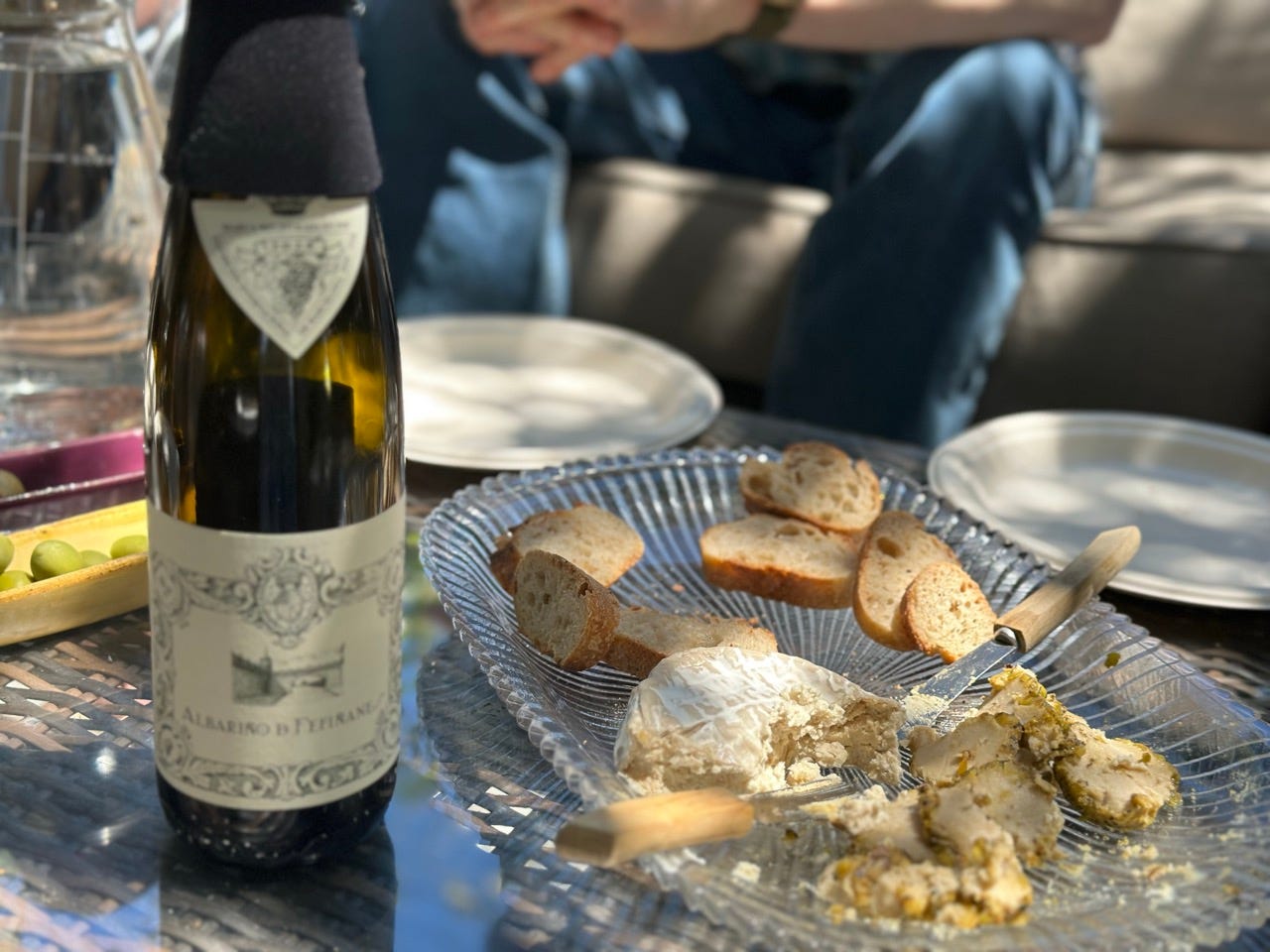
Albariño is super crisp and citrusy (and a new favorite of mine!), while the Verdejo was aged on the lees—meaning it rested on the spent yeast cells after fermentation. As a result, it was a bit on the yeasty, brioche-y side. Some people loved it, but it’s not my taste.
We chose a single food pairing for both the Albariño and the Verdejo: two artisan selections from Rebel Cheese—their creamy Brie and their Honee-Pistachio Chèvre—paired with (Italian) Castelvetrano and (Spanish) Queen olives.
While the two whites were distinctly different from one another, both had the acidity required for the pairing. That acid cuts straight through the dense fats of the cheeses and the salty brine of the olives, scrubbing your palate clean between every bite.
It was kind of perfect.
Complementing the Reds
For our second block, we poured two different expressions of Tempranillo—one a traditional Rioja Reserva, the other a dense Ribera del Duero Crianza.
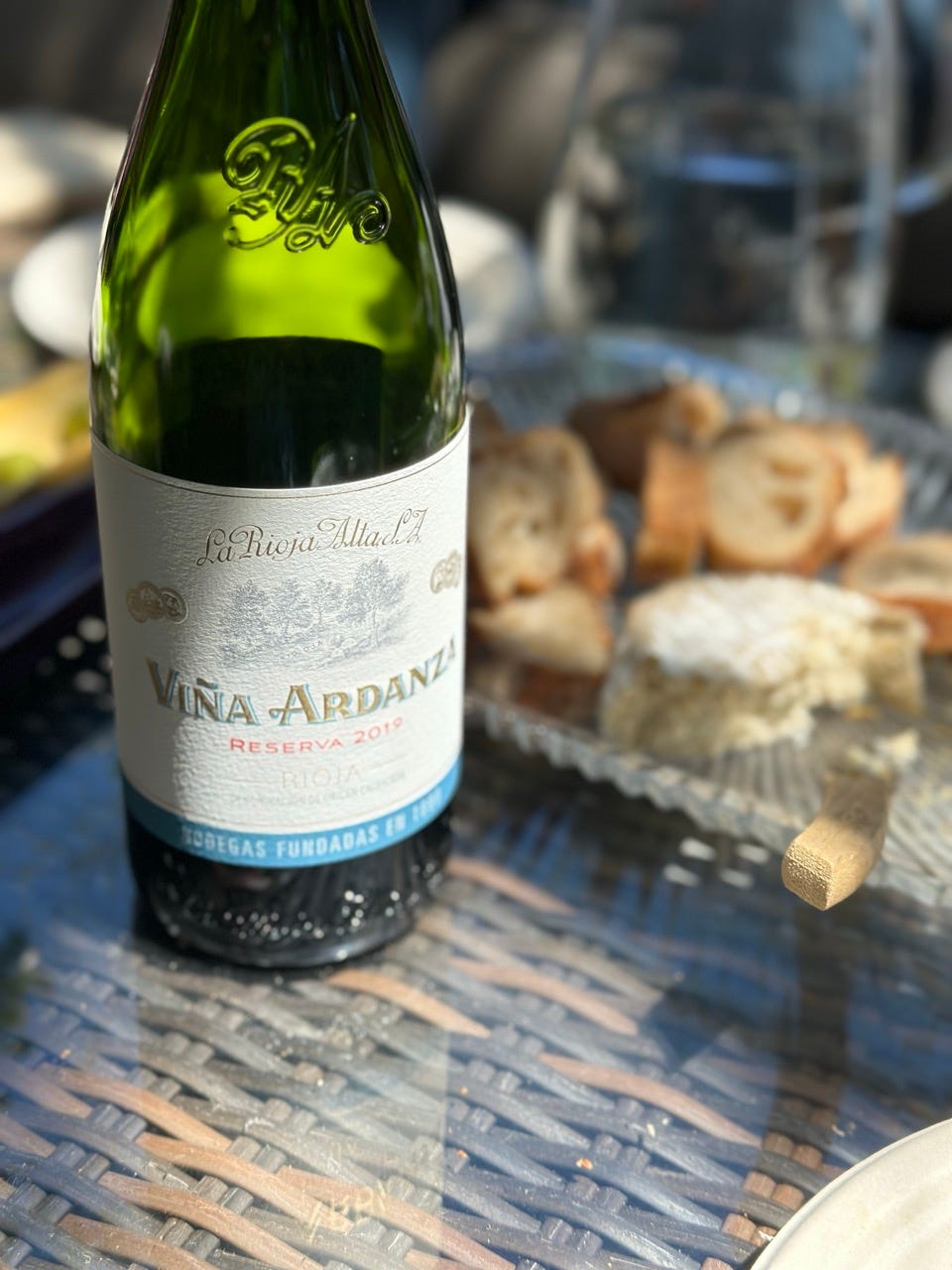
They couldn’t have been more different.
The Rioja, aged in American oak, was silky and smooth with distinct notes of coconut, vanilla, and sweet spice.
The Ribera del Duero—aged primarily in French oak—was a completely different beast: big, dark, and intensely tannic.
Seeing how regional climate and French versus American barrels transform the exact same grape was a great side-by-side study. (We plan to do more of these types of tastings in our Wine Collective.)
As for the food, the strategy here was to complement—matching the savory earthiness of the wines with a similar flavor profile in the food.
We paired both bottles with two different Field Roast plant-based sausages: Smoked Apple Sage and Italian Garlic and Fennel. The pairing worked beautifully with both wines.
My Take
The Rioja immediately became a new favorite for us (and most of our guests), though the Ribera was just too big and tannic for my taste. But you might have the opposite experience. That’s the point of wine tastings: there is no right answer, only different opinions and tastes.
Balancing the Big Red
For our final red block, we poured a Priorat—a Spanish blend of Garnacha (Grenache) and Carignan.
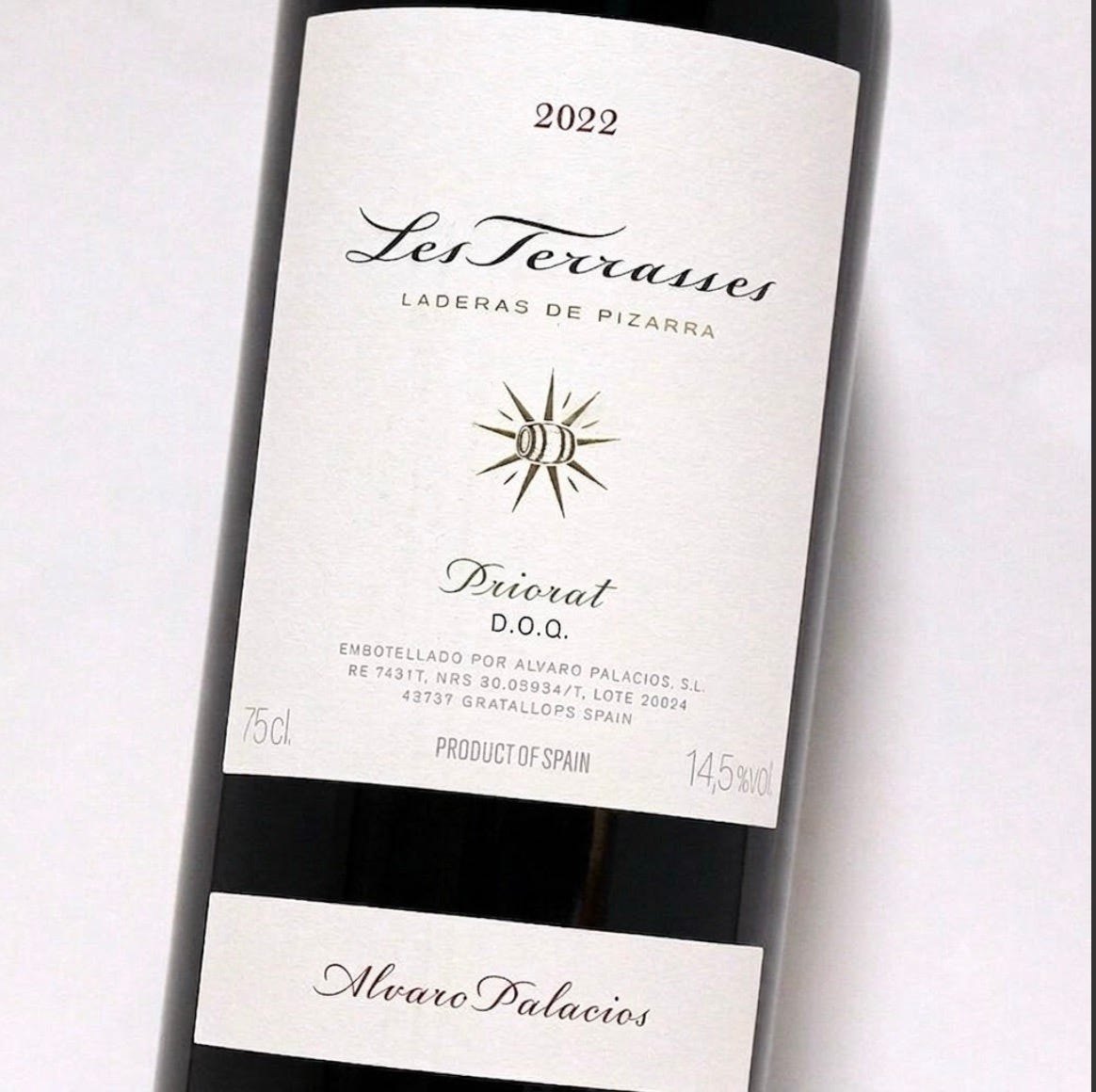
Normally, Garnacha (Grenache) is lighter than Tempranillo and would come earlier in a tasting order. But Priorat is a different story. It’s an intensely full-bodied, dark, and powerful red marked by concentrated dark fruit, licorice, and deep minerality. Because of its weight and size, we saved it for last.
As for the food pairing, we weren’t cutting through or complementing but balancing. When a wine has massive fruit, high alcohol, and savory-smoky notes, you need a food partner with equal weight, sweetness, and texture so neither overpowers the other.
So, for our Priorat, I prepared Muhammara—a dip made of roasted red peppers, walnuts, pomegranates, and a touch of sweetness. The natural smokiness of the roasted peppers and the rich, earthy fat of the walnuts balanced the wine’s heavy minerality, while the natural sweetness in the agave (and in the peppers) matched the dark fruit in the wine.
The pairing was fantastic, and the Priorat also instantly became a favorite — but not for the reasons it would have been in the past.
Putting It All Together
In the past, we judged wines strictly as “happy hour” drinks—drunk solo with maybe a random snack or two. If a bottle was too tannic, too big, or too intense, we just wrote it off as a wine we didn’t like, never to be touched or thought about again.
But our Wine Collective is completely shifting how we drink, as well as how we choose wines for dinners. We’re moving away from asking, “Do I like this wine?” and more toward, “How is this wine best enjoyed?”
The original intention was simple: try wines from different regions, try different grapes, go deep on them, and see how they taste depending on where they’re grown. We added the food pairings to start understanding how the food and wine could complement each other.
And it’s actually working. It’s changing how we drink wine, and it’s changing how we serve it.
As people who host a lot of dinners and parties, we used to just default to California Zinfandels because that’s what we drink most and love—we never really thought about what we were pairing or made decisions based on how well they worked together.
Why?
Because there’s almost zero real guidance out there for plant-based food and wine—so we’re taking up the mantle and filling in the gap. And let me tell you, it’s a lot of work to make fabulous food, drink fabulous wine, and enjoy it with fabulous people.
So, you’re welcome.
Travel the Vegan World with Me!
👉 I’ve partnered with World Vegan Travel to bring you the best in luxury, all-inclusive vegan trips around the globe. Whether I am personally hosting or not, every itinerary is curated for a high-quality, premium experience. Cambodia is the only trip I’m currently scheduled to host in 2027, so check it out, and remember when booking any trip to mention you heard about them from Colleen Patrick-Goudreau, and enter JOYFULVEGAN as the promo code. 😊

My Favorite Supplements
Even with a nutrient-rich plant-based diet, we can thrive even more with thoughtful support. That’s where Complement comes in, I take Complement Essential as my daily multivitamin for B12, D3, iodine, zinc, and magnesium; Omega Complex for essential fats; and as part of my strength-training and muscle-building routine, I fuel up with their clean Organic Protein. With Complement and my nutrient-rich diet, I have everything I need to fuel my body, support my strength, and thrive so I can do my work in the world for animals — both human and non-human.
I love this series! Bubblies are my favorite, so I'm excited to try a Cava if I can find it. I'm looking forward to the recipes too.